
Last updated November 15, 2026
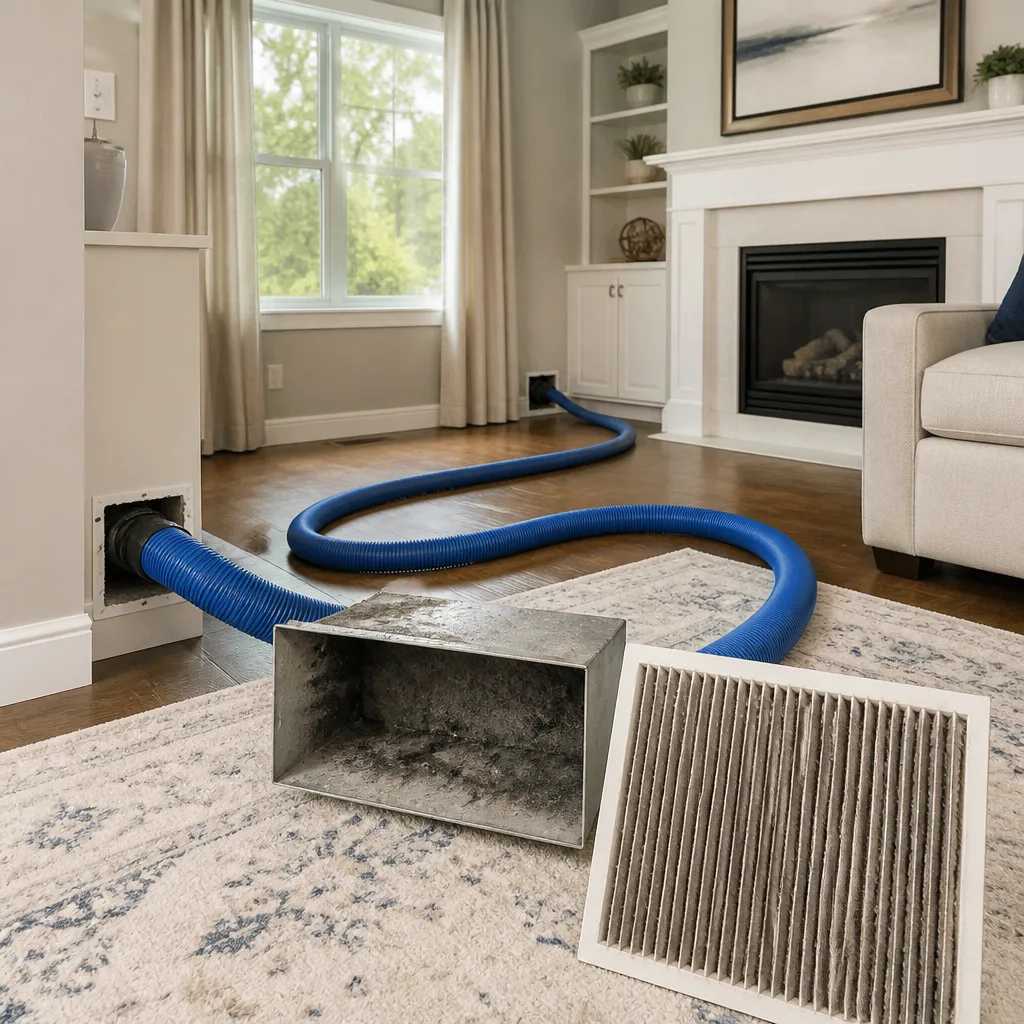 Whole-home duct cleaning
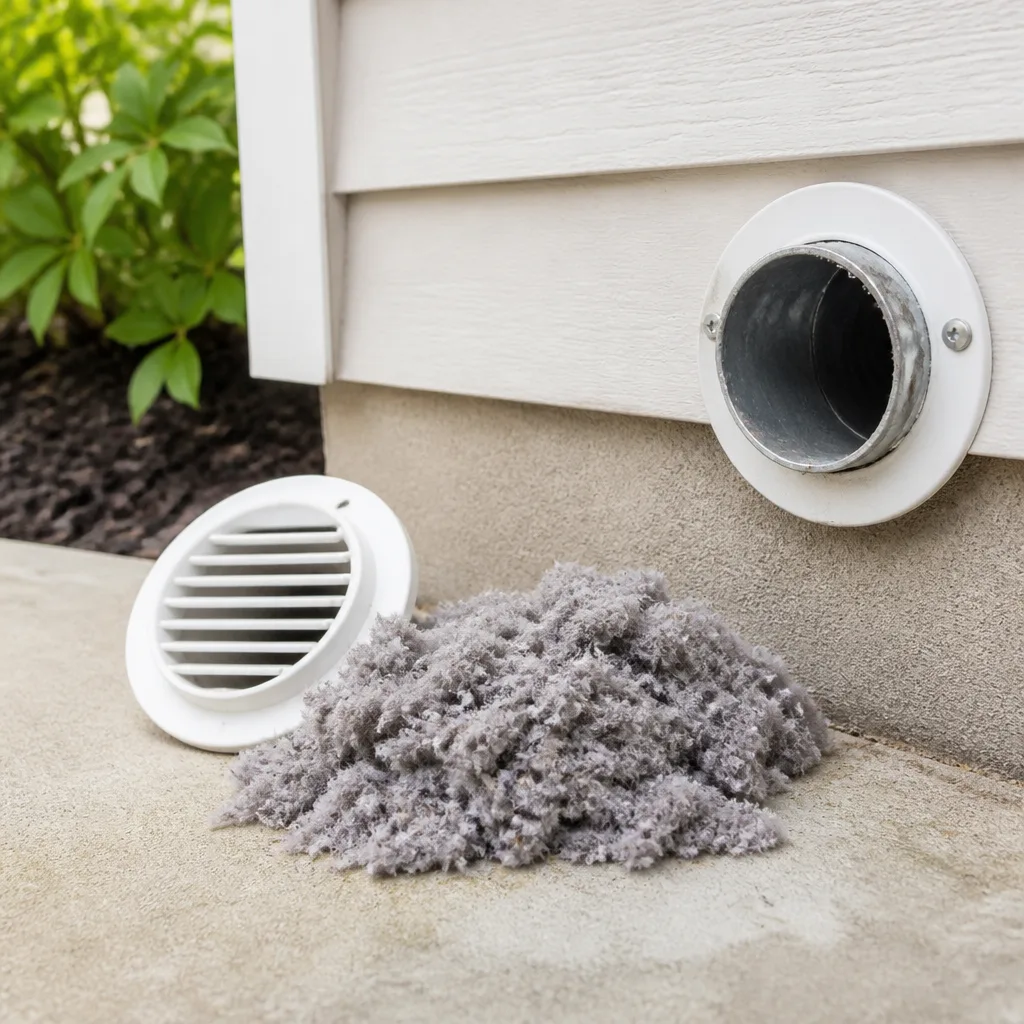 Dryer vent cleaning
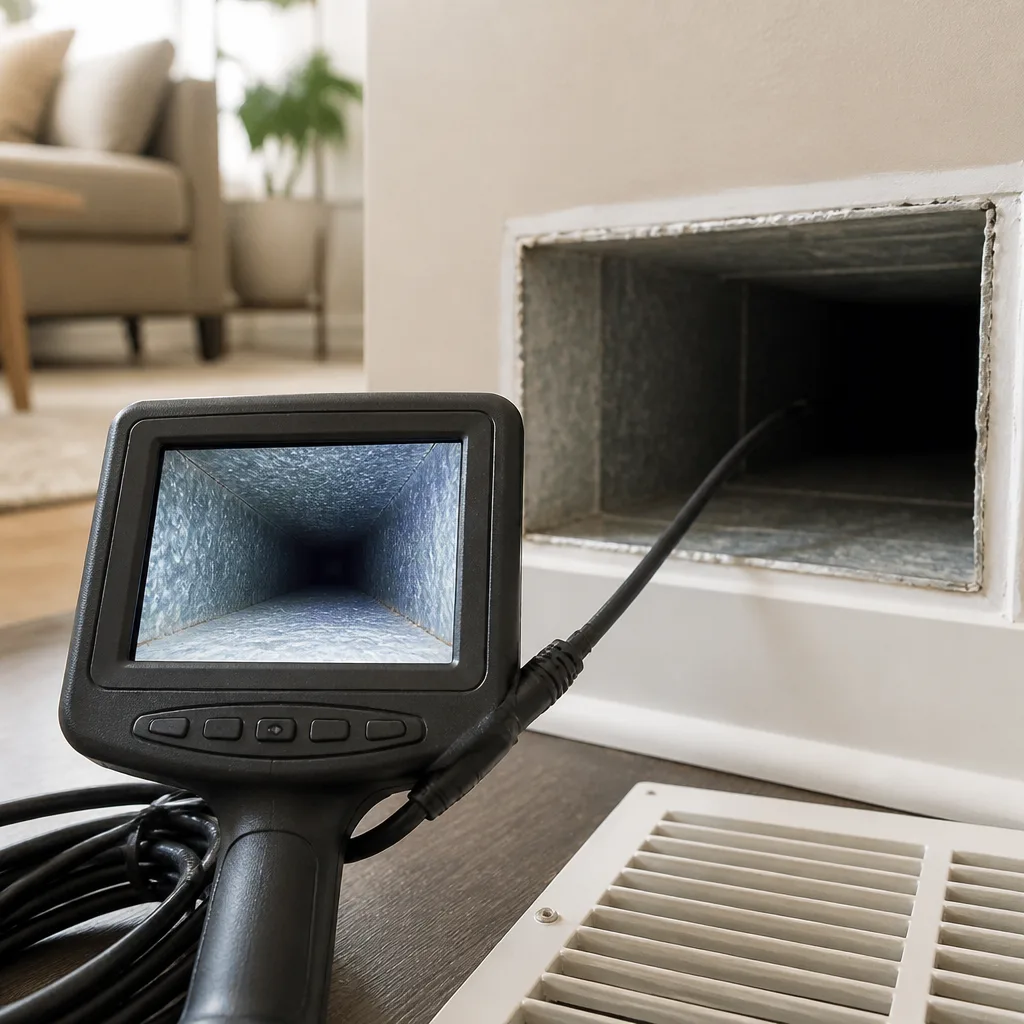 Camera inspection
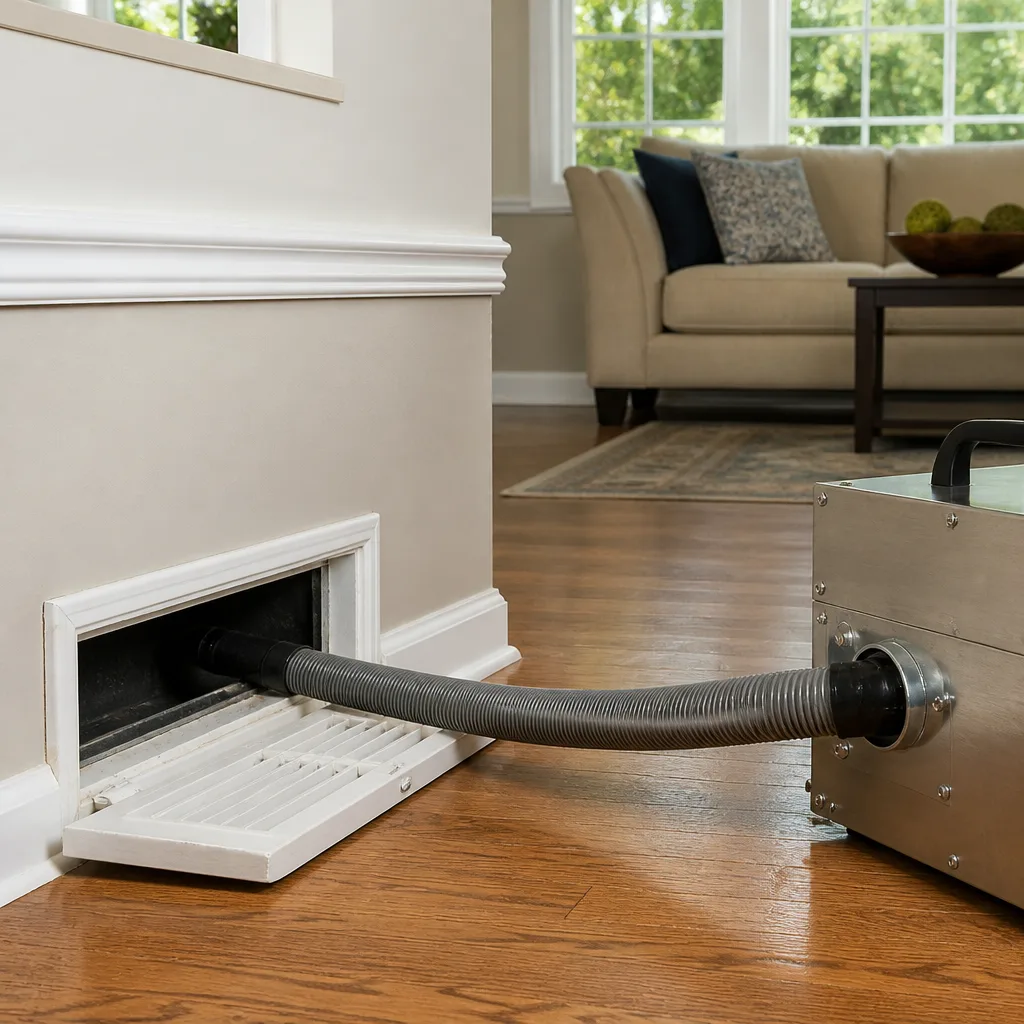 Sanitizing & deodorizing
Whole-system duct and dryer vent check with before-and-after photos - you see exactly what came out of your vents
That "$99 whole-house special" is a bait ad - the real number appears once they are in your hallway, or the "clean" is a shop-vac at the register. We photograph the inside of your ducts before and after instead.
Air Duct Cleaning Troubleshooting in Elizabeth: Common Problems and How to Fix Them
If your ducts were cleaned six months ago and you’re back to dusty vents, the problem probably isn’t your ducts. It’s that the cleaning never reached the main trunk lines and branch runs where most of the debris actually accumulates. Surface cleaning of registers and visible ductwork doesn’t move the material that sits in the trunk lines, the plenum, or the runs behind walls. This guide walks through the symptoms that bring Elizabeth homeowners to search for answers, how to tell a genuine system problem from a service failure, and what each situation actually needs. By the end you’ll know what to check yourself, what a flashlight inspection can reveal, and when to stop guessing and get a real assessment.
Quick Answer
Most recurring duct problems in Elizabeth come from incomplete cleaning that stopped at the registers and never reached the trunk lines, plenum, or branch runs. Poor airflow is often a filter, blower, or obstruction issue rather than a dirt problem, so it needs to be diagnosed before anyone cleans anything. A persistent musty smell after service usually means biological debris was left behind or sanitizer is still off-gassing, and the difference matters for what you do next.
Styles & brands we work with
- Whole-home duct cleaning
- Dryer vent cleaning
- Camera inspection
- Sanitizing & deodorizing
Table of Contents
- Poor Airflow After Cleaning: Obstruction or Mechanical?
- What “Cleaning Smell” Means and When It Signals Incomplete Work
- How to Visually Inspect Your Own Registers
- Condensation Mold Odor vs. Accumulated Biological Debris Odor
- When a Camera Inspection Should Come First
- Why the Dust Comes Back: Repeat Debris Sources
- How to Evaluate a Duct Cleaning Provider
- Duct Repair After Cleaning Reveals Damage
Poor Airflow After Cleaning: Obstruction or Mechanical?
Weak airflow after a cleaning is not automatically a duct problem, and paying for cleaning when the real issue is mechanical wastes money without fixing anything. Before you call anyone, separate the two: airflow problems fall into duct-side causes (blockage, crushed flex duct, disconnected runs, closed dampers) and equipment-side causes (dirty filter, failing blower motor, blower wheel buildup, undersized return).
Start with the filter. A loaded filter is the single most common cause of weak airflow, and it costs nothing to check. Pull it, hold it to light, and if you can’t see through it, replace it. Then run the system and feel the airflow at several supply registers. If some rooms are strong and others are weak, that points to duct-side blockage or a closed damper. If every register is weak, that points to a filter, blower, or return-side issue.
A few signs help you sort this out without tools:
- One room weak, the rest fine: likely a closed damper, crushed or disconnected branch run, or debris blocking that run.
- All rooms weak: check filter first, then suspect the blower wheel. A dust-caked blower wheel moves far less air than a clean one.
- Weak airflow plus whistling: restricted return air. The system is starved and can’t move the volume it’s rated for.
- Weak airflow plus a hot or tripping blower: mechanical. Stop and get an HVAC technician, not a duct cleaner.
- Weak airflow right after a cleaning: someone may have knocked a run loose or left debris in a branch. That’s a service quality problem, not a dirt problem.
The important move is this: if the blower or filter explains the symptom, cleaning ducts won’t fix it. Get the mechanical issue resolved first. Duct cleaning in Elizabeth should follow a diagnosis, never substitute for one.
What “Cleaning Smell” Means and When It Signals Incomplete Work
Some smell after duct cleaning is normal and fades within a few days. A smell that persists beyond that, or gets stronger over time, usually means debris was left behind, a sanitizer is reacting with surfaces, or a moisture problem was never addressed.
When ducts are agitated with a rotary brush and pulled under HEPA vacuum, you liberate dust that has been sitting in the system for years. Some of it becomes airborne before it gets captured. That’s the light, dusty smell you may notice for a day or two. It should diminish with normal system operation and air exchange. Sanitizers and fogging products leave their own trace for a short period as they off-gas, again diminishing.
The smell you should not ignore has a few distinct forms:
- Woodsmoke, char, or burnt-plastic smell: stop using the system and get it checked. That’s not a cleaning smell.
- Persistent musty or earthy smell: biological growth or wet debris, usually moisture-related. More cleaning alone won’t solve it.
- Chemical or solvent smell that lingers for weeks: sanitizer residue reacting with debris, or product applied too heavily in a system that was never fully cleared first.
- Smell that returns immediately after a cleaning “resolved” it: the source was masked, not removed.
In our experience, the smell that tells the real story is the one that comes back after a short break. A system that was genuinely cleaned and dried shouldn’t redevelop a musty odor in a couple of months unless moisture is still entering it. If you’re seeing that pattern in an Elizabeth home, the next step is finding the moisture source, not scheduling another cleaning.
How to Visually Inspect Your Own Registers
You can learn a lot about a previous cleaning with a flashlight and five minutes. The registers are the visible end of the system, and what’s behind them tells you whether the work reached the branch runs or stopped at the main.
Here’s the sequence:
- Remove the supply register grille. Most are held by two screws or clipped in. Set the screws somewhere safe.
- Shine the flashlight up into the boot and branch run. Look at the first few feet of the duct interior. It should be clean metal or clean flex liner, not coated in dust.
- Run a finger along the inside edge of the boot. A thin film is normal. A thick, gummy, or fuzzy coating means that branch wasn’t reached.
- Repeat at several supply registers across different rooms. If some branches are clean and others are coated, the cleaning was partial.
- Check the return registers the same way. Returns carry the heaviest dust load. A dirty return after a claimed cleaning is a strong sign the job was incomplete.
- Look for debris on the register fins themselves. Clean fins with dirty ductwork behind them is the signature of a surface-only job.
- Note anything loose, disconnected, or taped shut behind the grill. That’s a repair item, and you want it found before cleaning.
One important safety line before you start: turn the system off at the thermostat before you open any register, and never reach your hand into ductwork you can’t see. Sharp edges, sheet metal screws, and the blower wheel are hazards. Look, don’t feel around. If your home has any known asbestos-containing duct wrap or insulation, leave it sealed and get professional advice before opening anything.
What you’re looking for is consistent evidence. Three coated branches out of ten is not normal wear, it’s incomplete cleaning. Ten clean branches with one dusty one could just be a branch that’s only recently stopped sealing properly.
Condensation Mold Odor vs. Accumulated Biological Debris Odor
These two smells are often treated as the same problem. They aren’t, and the response differs.
Condensation-related musty odor comes from water. It forms where cool duct surfaces meet humid air, typically on ductwork in unconditioned spaces, or where a system runs cold in a humid season. In ductwork, condensation mold odor is usually localized and traces back to a moisture path: a gap in insulation, a sweating boot, a duct run through a damp crawl space, or high indoor humidity. The main fix is moisture and insulation, not cleaning.
Accumulated biological debris odor comes from what has grown in the dust itself. Organic material accumulates on duct surfaces, and in a system that stays cool and slightly damp, it can develop its own smell. That’s a cleaning problem, and it needs full mechanical agitation and HEPA containment to resolve, along with correcting whatever conditions let it develop.
How to tell them apart:
- Seasonal pattern: a smell that appears in warm, humid weather and fades in dry weather points to condensation.
- Room pattern: smell strongest near a specific run that passes through a crawl space or unconditioned attic points to that run’s insulation.
- System-on symptom: smell that appears only when the air runs, from most registers, points to debris in the system.
- Moisture evidence: staining, rust, or water marks near a duct, air handler, or register. That’s a moisture answer.
If you find visible staining or wet insulation, get that addressed before any further cleaning. Cleaning a damp system without fixing the moisture makes the problem worse. This is why a professional assessment matters: eliminating the moisture path and cleaning the system are separate jobs, and doing the second without the first is wasted work.
When a Camera Inspection Should Come First
A camera inspection belongs before cleaning whenever the symptom doesn’t fit the routine case. Cleaning first and inspecting after is backwards, and it’s how homeowners end up paying twice.
Request an inspection before any cleaning is attempted when:
- There’s a smell you can’t locate. Camera work finds the source of a moisture or biological odor before someone cleans the wrong thing.
- Airflow is weak and the filter and blower check out. You need to see whether a run is crushed, disconnected, or blocked.
- A prior cleaning claims were made but symptoms persist. Camera footage gives you an objective view of what was actually reached.
- There’s visible water staining or rust. You need to know the extent before disturbing anything.
- The home has known flex duct with runs through tight spaces. Flex duct can collapse or tear out of sight, and airflow follows.
- You’re buying or moving into an Elizabeth property. An inspection tells you what the system needs before you commit to a scope of work.
Our technicians have up to 11 years of experience, and the pattern is consistent: the jobs that surprise people are the ones where the damage was known only after the fact. A camera inspection takes a fraction of the job time and prevents the scenario where cleaning happens, airflow is still weak, and the real cause turns out to be a crushed branch run that was never visible from the register.
This is also where having repair alongside cleaning matters. If the inspection finds a torn branch, a disconnected run, or a crushed section, the job needs a scope that includes Duct Cleaning Elizabeth and air duct repair, not a cleaner who stops at cleaning. We don’t stop at the cleaning if a repair is needed.
Why the Dust Comes Back: Repeat Debris Sources
Dust that returns within months of a cleaning usually has a source that cleaning can’t fix. The cleaning removes what’s in the ducts. It doesn’t stop new material from entering.
The common repeat sources:
- A loaded or wrong-size filter. Cheap filters with a low MERV pass more material into the system; overdue filters restrict airflow and let the blower get dirty.
- Return-side leaks. A gap in return ductwork in a garage, crawl space, or basement pulls unfiltered air straight into the system.
- Incomplete cleaning of the trunk and plenum. The trunk carries the most volume and the most debris. A job that only cleans branches leaves the main accumulation behind.
- Unsealed or disconnected runs. A branch that’s pulled loose feeds dust into a wall cavity and moves less air. The register stays dusty and the cleaning gets blamed.
- Remodel or construction dust. Renovation work in the home loads the system heavily and often needs a cleaning afterward, not before.
- Dryer vent issues. A blocked dryer vent doesn’t add dust to the duct system, but lint fires and backdrafts are their own serious problem and should be addressed alongside any home air quality review.
If your Elizabeth home has a crawl space or basement with ductwork running through it, the return-side leak check is the one most often skipped. It’s also the one that explains the fast return of dust most often. Ask for it to be looked at specifically. If a home air quality review is part of the conversation, mention it, since we work alongside air duct cleaning systems built around Aprilaire and Honeywell platforms and understand how the whole-home ecosystem fits together.
How to Evaluate a Duct Cleaning Provider
Most duct cleaning complaints trace back to the provider selection, not the ducts. The equipment and the scope determine whether the work reaches the trunk lines. Here’s what to look for.
Ask these questions before booking:
- What equipment do you use? A shop vacuum and a rotating whip is a different job from a source-containment vacuum plus mechanical agitation. Ask for the specific equipment and be wary of a vague answer.
- Is the price per system or per vent? Per-vent pricing is a setup for a low advertised number and a large invoice. A flat price for the whole system agreed before work starts is the honest model.
- What’s included in the quoted scope? Registers, branch runs, trunk lines, and plenum should all be in the scope. Ask what’s excluded.
- Do you take before-and-after photos? Insist on photos of your own system. Anyone can show a photo of someone else’s ducts.
- What happens if you find damage? A provider that only cleans will hand you a second problem. Ask whether repair is in the scope.
- How do you handle dryer vents? It’s a separate fire-safety item. A provider that only mentions it as an upsell isn’t thinking about it the way you should.
We use professional-grade equipment, not a shop vac and a coupon: Rotobrush rotary brush systems for mechanical agitation and extraction, Nikro HEPA-rated vacuum for containment-level capture, and Abatement Technologies equipment for the contamination-level and air-quality-critical scenarios that routine maintenance equipment can’t handle. That equipment stack matters because the failure mode you’re troubleshooting in most Elizabeth homes (debris that never left the trunk) is exactly what underpowered equipment leaves behind.
If you want the fullest picture of what a proper cleaning should include, our air duct cleaning service page lays out the process step by step.
Duct Repair After Cleaning Reveals Damage
Cleaning often reveals damage that was hidden, and that’s useful information, not a bait-and-switch. Crushed flex runs, torn insulation, disconnected joints, and sagging duct sections are common findings, especially in older homes where ductwork has settled or been bumped during renovations.
A repaired system costs you less in the long run because it actually holds the airflow. A crushed branch run that stays crushed means the cleaning you paid for only helps the rest of the system. A disconnected run means the room it serves gets nothing, and the cavity it’s venting into gets everything.
What a repair scope typically covers:
- Reconnecting disconnected branch runs and sealing joints properly
- Replacing or straightening crushed flex duct sections
- Repairing torn outer insulation and vapor barriers
- Re-securing sagging ductwork and correcting improper supports
- Sealing leaks at boots and register connections
The advantage of having cleaning and repair under one scope is that the damage is found and fixed in the same visit rather than becoming a second project with a second contractor. If your inspection finds damage and you’re trying to figure out who to call, our Elizabeth page has the local details, or you can ask us to include a repair scope in the estimate.
Common Mistakes to Avoid
- Paying for cleaning when the problem is the blower or filter. Weak airflow across every register usually traces to the filter or a dust-caked blower wheel. Fix the mechanical issue first, or the cleaning won’t change anything.
- Accepting a per-vent price. A per-vent number lets a provider start low and grow the invoice after the technician is in the home. Ask for one flat price for the system, in writing, before work begins.
- Trusting a cleaning with no before-and-after photos. Photos of your own ducts are the proof that the work reached the branches and the trunk. Without them, you’re taking the claim on faith.
- Skipping the return side. Returns carry the heaviest debris load. A quote that lists only supply registers isn’t covering the whole system, and in Elizabeth homes with crawl space or basement run returns, that’s where the dust source usually lives.
- Cleaning a damp system without finding the moisture source. If there’s staining or rust anywhere near the ductwork, address the moisture before the cleaning. A damp system gets worse, not better.
- Scheduling a cleaning before the inspection when airflow is the complaint. If the symptom doesn’t fit routine maintenance, ask for the camera inspection first. Cleaning after a failed diagnosis is how people end up paying twice.
- Overlooking the dryer vent. A blocked dryer vent is a separate fire-safety concern from duct cleaning, and it deserves its own scope. If the vent hasn’t been evaluated, ask about it.
See the difference
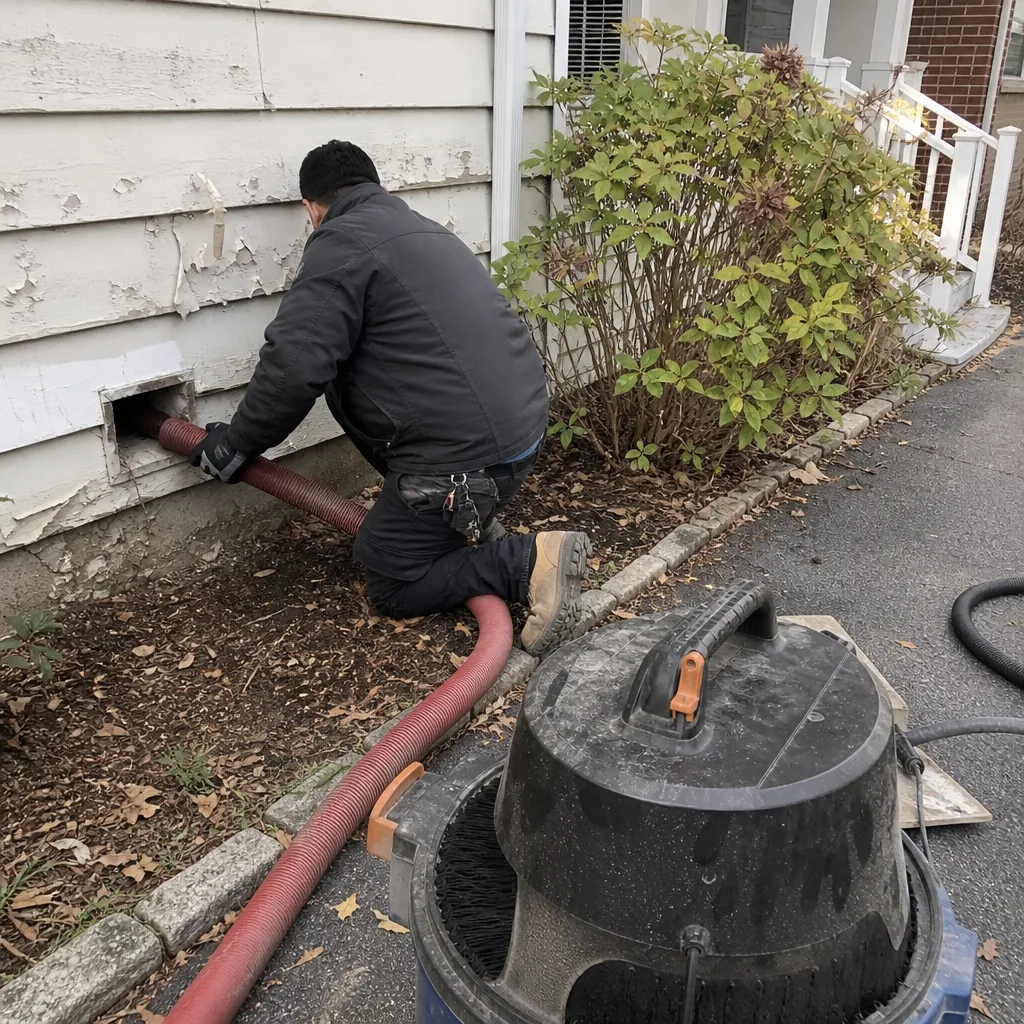 Before
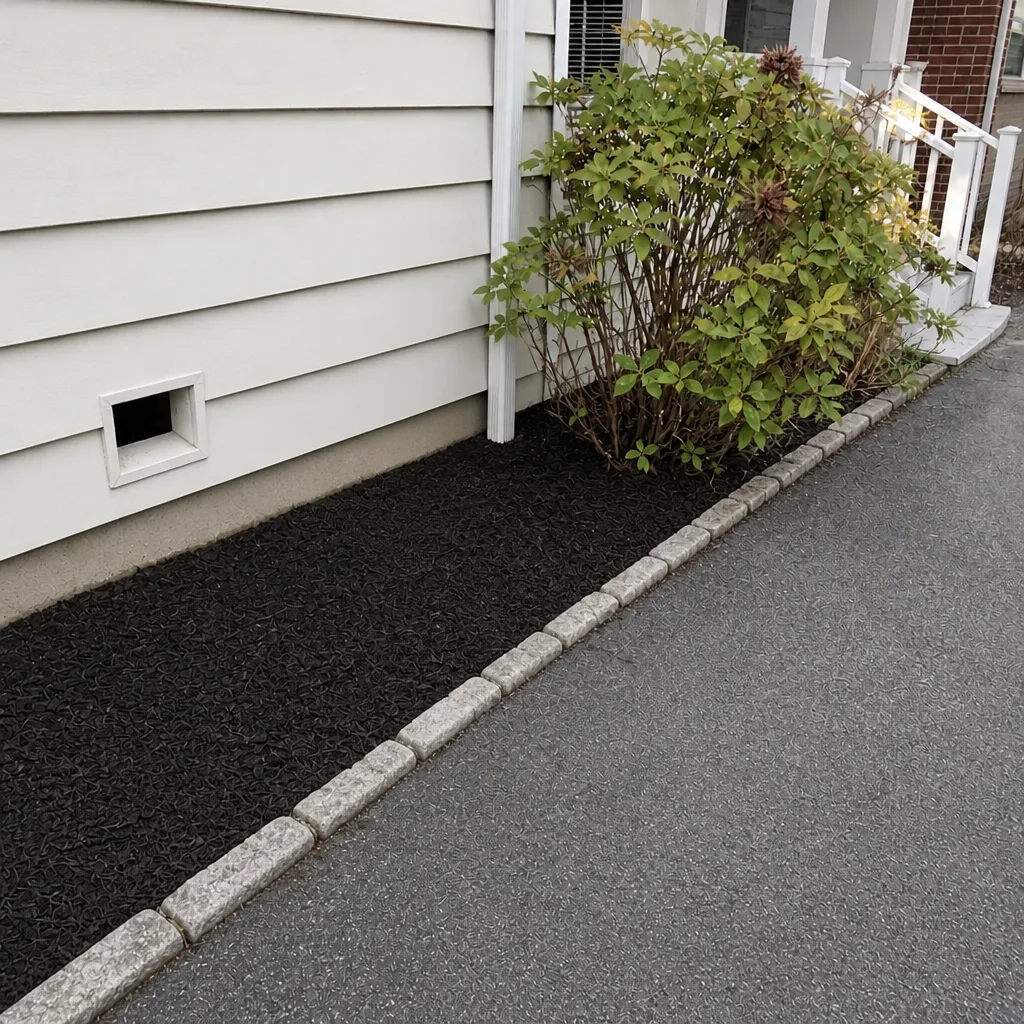 After
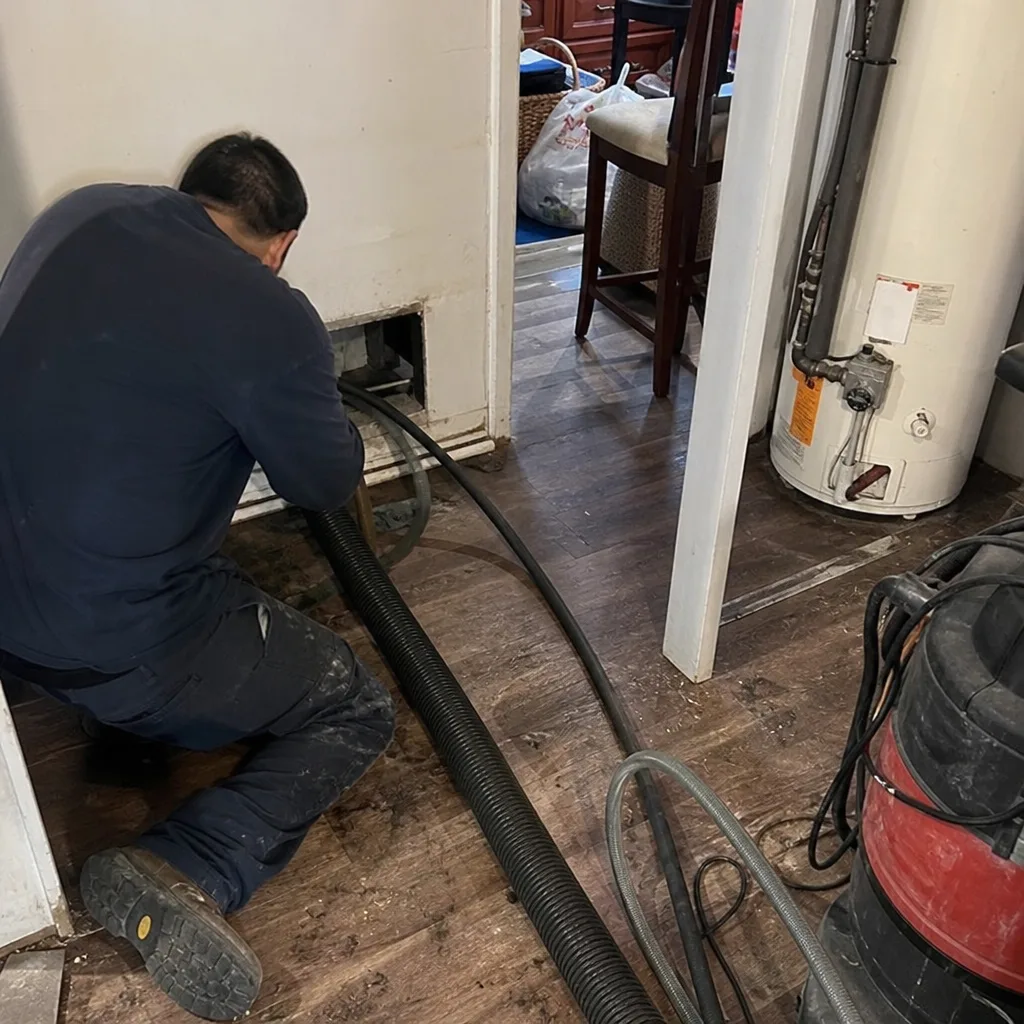 Before
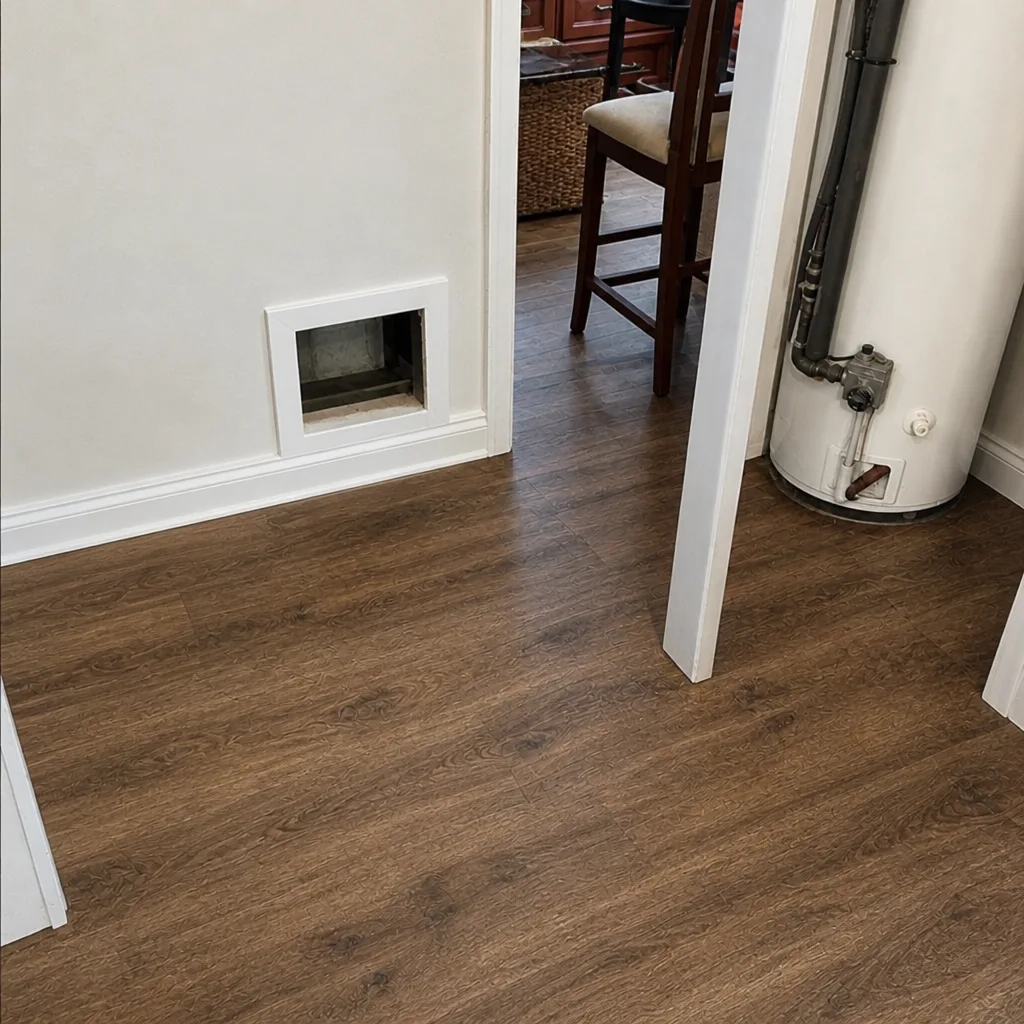 After
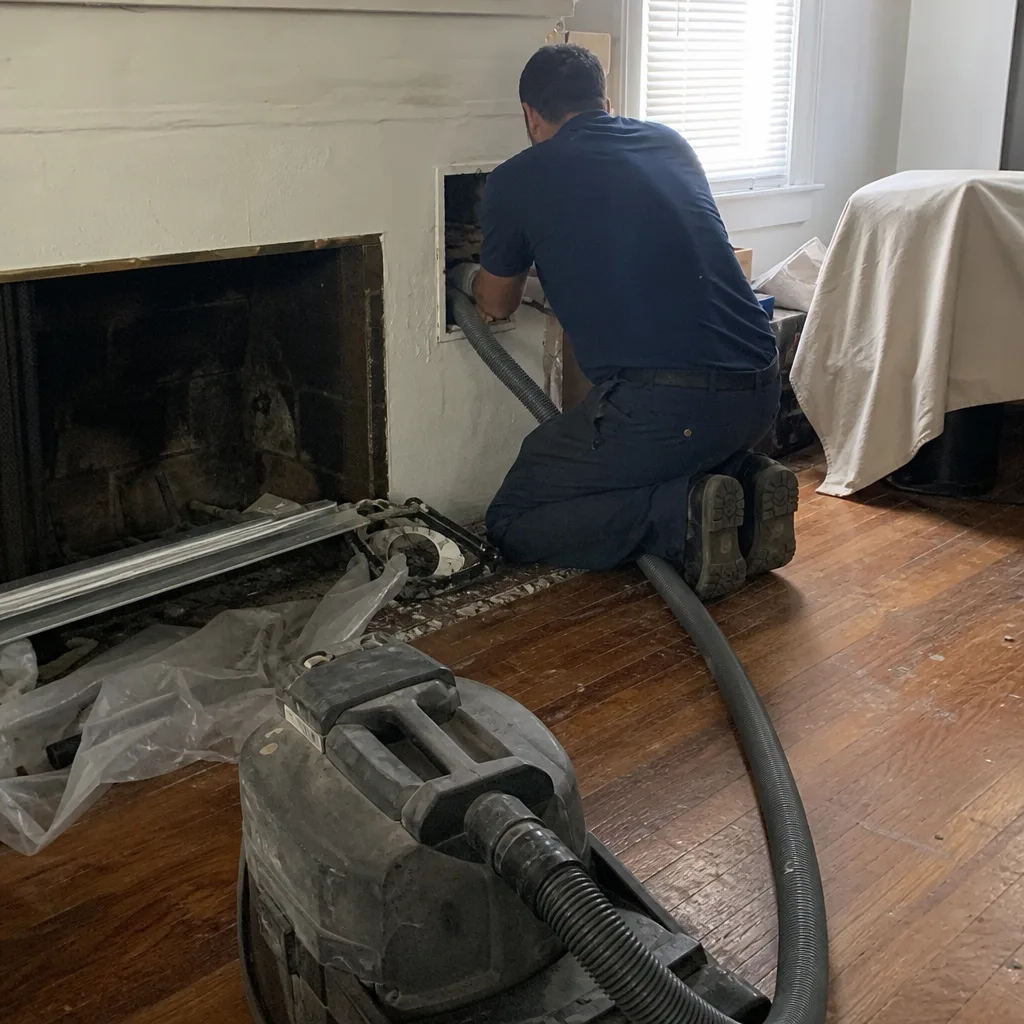 Before
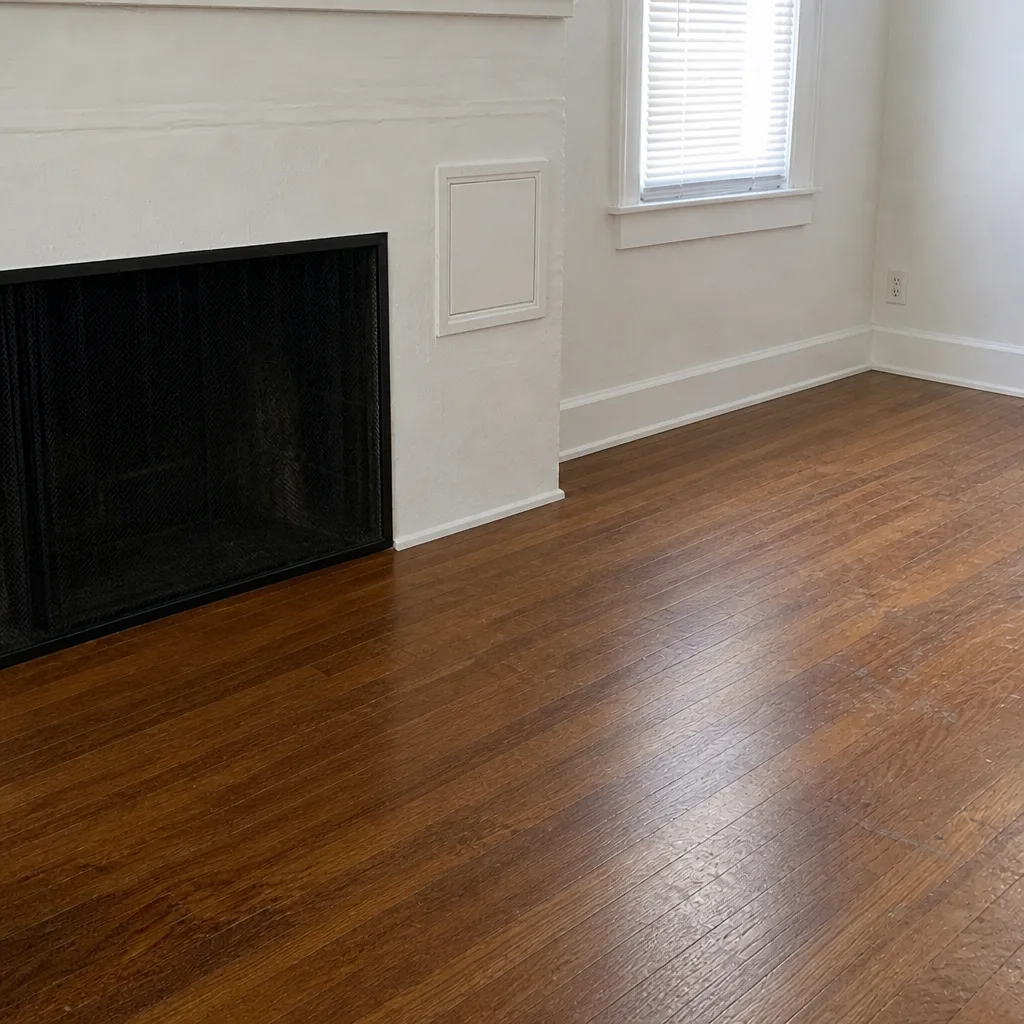 After
When to Call a Professional
Call a professional when a flashlight inspection shows several branch runs coated in debris, when a smell returns shortly after it seemed resolved, or when airflow is weak at every register after the filter was replaced. These are the situations where cleaning or repair will actually change the outcome. Call sooner if there’s visible water staining or rust near ductwork, a burnt or chemical smell from the system, or a dryer that takes unusually long to dry a load. If a prior cleaning claimed a full job and the registers are dusty again, that’s worth a second look. The estimate is free, the price is set per job by the written estimate, and the scope is agreed before work starts. Duct Cleaning Elizabeth offers free estimates in Elizabeth. Call (833) 946-6248.
Frequently Asked Questions
Usually because the cleaning never reached the trunk lines and branch runs, where most debris accumulates, or because a return-side leak is pulling unfiltered air into the system. Check the filter first, then have the trunk and returns inspected. Call (833) 946-6248 for an exact quote; estimates are free.
Pricing is set per job by a written estimate after the system is assessed, because cost depends on the number of runs, the layout, access, and whether repair is needed. We don’t price per vent, and we don’t publish a teaser figure. Call (833) 946-6248 for an exact quote; estimates are free.
Cheap quotes usually cover less work: surface cleaning of registers and visible ductwork without mechanical agitation or HEPA containment, and often without the trunk lines. The low number gets the technician in the door, and the scope grows from there. Ask what equipment is used and what’s included before comparing prices. Call (833) 946-6248 for an exact quote; estimates are free.
Insist on before-and-after photos of your own system, and do your own register check with a flashlight afterward. If the branch runs behind the registers are still coated, the work didn’t reach them. Call (833) 946-6248 for an exact quote; estimates are free.
Most homes don’t need a fixed interval, and the frequency depends on the home. Pets, renovation dust, a crawl space return leak, and a homeowner with allergies all change the answer. Inspect and clean when evidence shows the system has accumulated material, not on a calendar. Call (833) 946-6248 for an exact quote; estimates are free.
Not on its own. A smell that follows warm, humid weather usually points to condensation and a moisture path, not to accumulated debris alone. Cleaning a damp system without fixing the moisture source makes the problem worse. Fix the moisture first, then clean. Call (833) 946-6248 for an exact quote; estimates are free.
The Bottom Line
Most recurring duct symptoms that send people searching for troubleshooting answers are signs of incomplete cleaning, not dirty ducts that need another cleaning. If airflow is weak everywhere, check the filter and consider the blower before you book anything. If the smell returns after a short break, look for moisture, not more cleaning. Use a flashlight to confirm whether a prior job reached the branch runs and the trunk. And if the symptom doesn’t fit the routine case, get a camera inspection first. Fix the cause, then clean the system. Call (833) 946-6248 for a free estimate. We answer 24/7. Fast dispatch from 7am to 7pm, Sunday through Friday.
Written by the team at Duct Cleaning Elizabeth.