
Last updated November 15, 2026
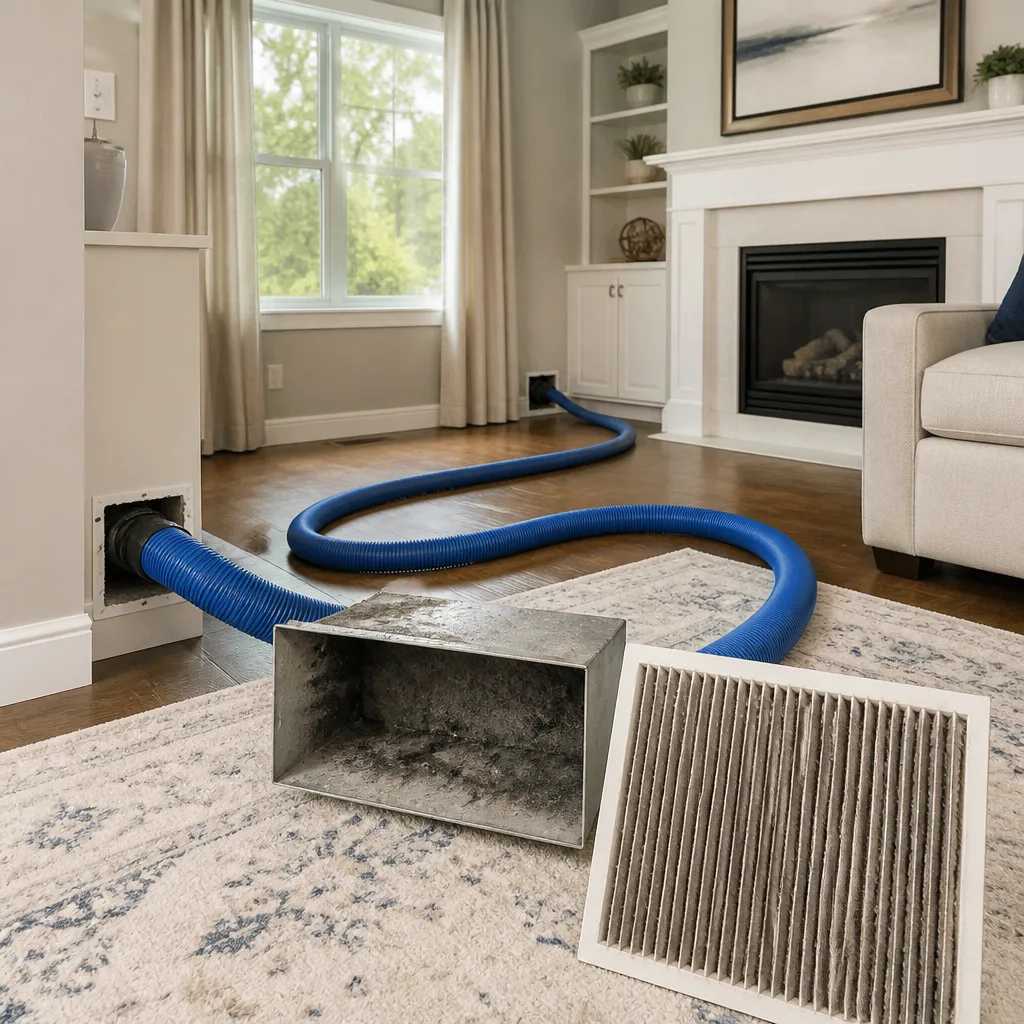 Whole-home duct cleaning
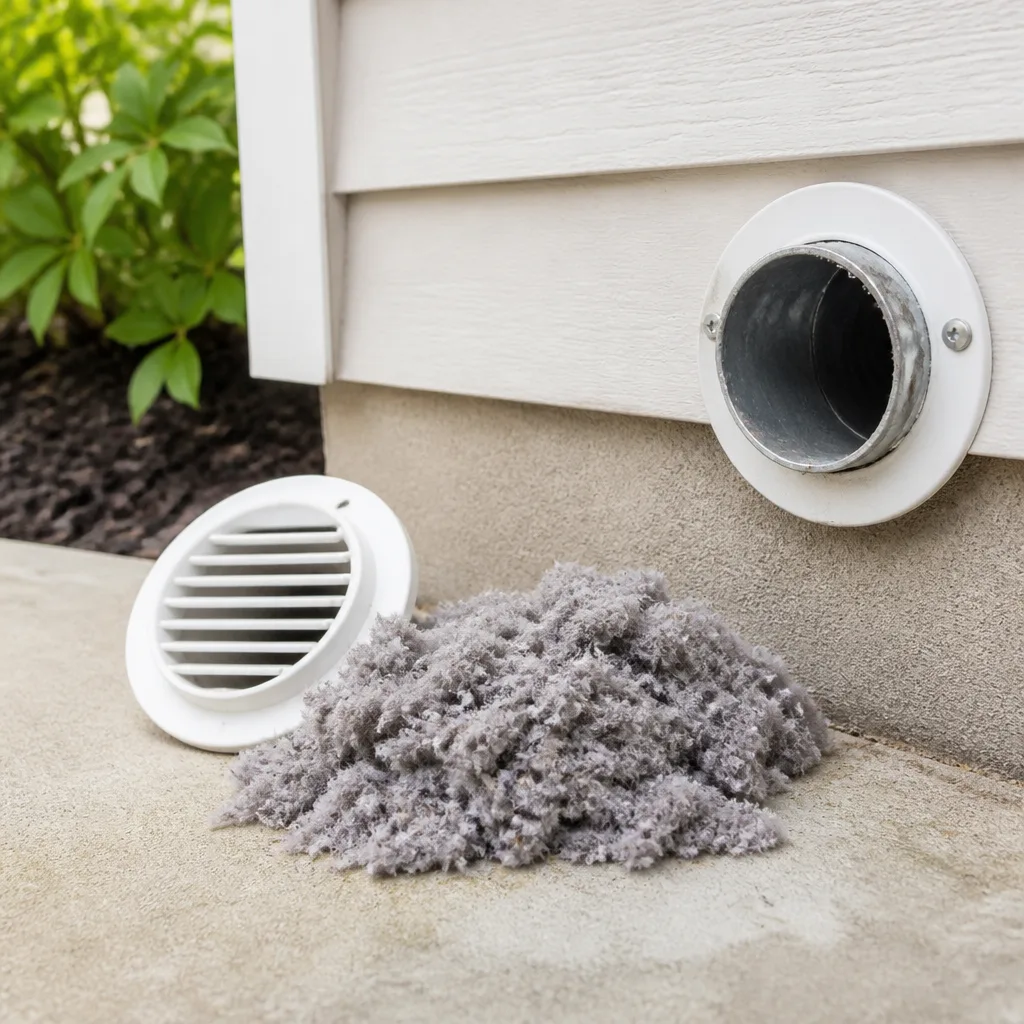 Dryer vent cleaning
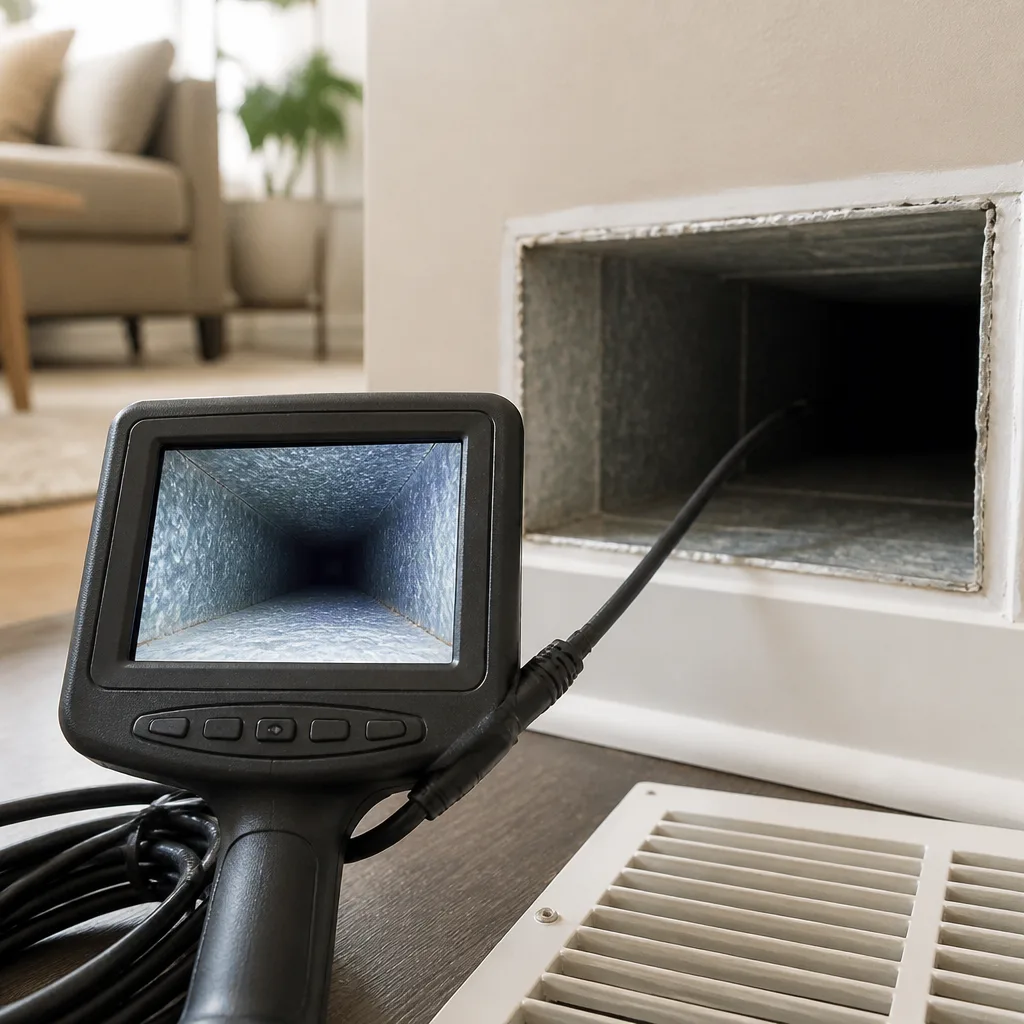 Camera inspection
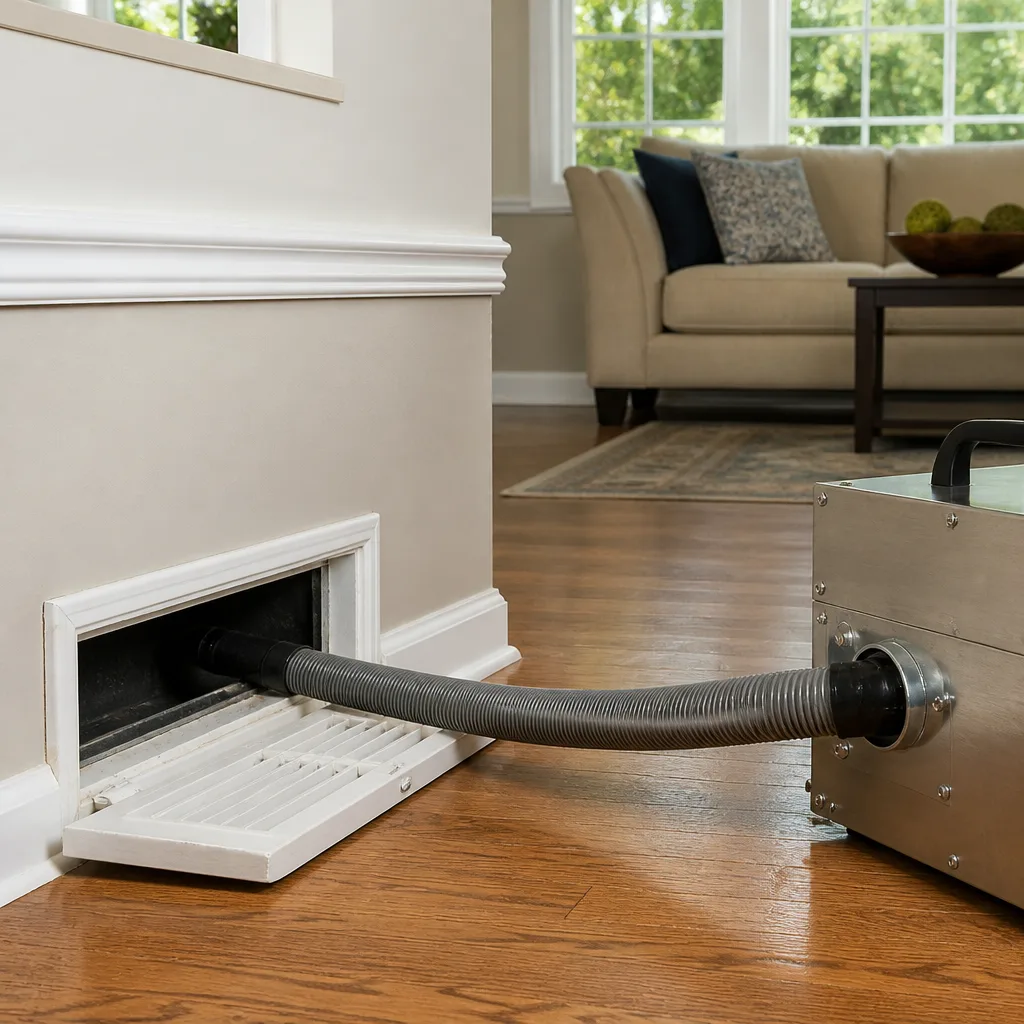 Sanitizing & deodorizing
Whole-system duct and dryer vent check with before-and-after photos - you see exactly what came out of your vents
That "$99 whole-house special" is a bait ad - the real number appears once they are in your hallway, or the "clean" is a shop-vac at the register. We photograph the inside of your ducts before and after instead.
Air Duct Cleaning Warning Signs: An Elizabeth Homeowner’s Reference Guide
When a room won’t cool evenly, most people blame the thermostat or the HVAC unit. But in Elizabeth’s older housing stock, the more common cause is a partially blocked return duct that’s been quietly accumulating debris for decades. The same holds for that musty smell you’ve decided is “just an old house thing,” or the dust that reappears on the furniture days after you wipe it down. These aren’t separate problems. They’re symptoms pointing at the same system. This guide teaches you to trace each one back to its actual source, separate the signs that call for cleaning from the signs that call for repair, and know when to stop guessing and get an inspection.
Quick Answer
The main warning signs that your air ducts need attention are uneven airflow between rooms, visible dust buildup around supply registers, a musty or stale smell when the system runs, increased allergy symptoms indoors, and dust streaks near the vents. In Elizabeth homes, these usually point to debris in the trunk lines, a blocked return duct, or moisture feeding biological growth inside the ductwork. Persistent airflow problems combined with visible damage often mean the ducts need repair, not just cleaning.
Styles & brands we work with
- Whole-home duct cleaning
- Dryer vent cleaning
- Camera inspection
- Sanitizing & deodorizing
Table of Contents
- Matching the Symptom to the Duct Problem
- Cleaning Signs vs. Repair Signs: The Critical Difference
- Warning Signs That Follow Specific Events
- The Allergy and Respiratory Connection, Explained Honestly
- What Your Registers Are Telling You
- Warning Signs You Can Only See During a Professional Inspection
- Why Elizabeth’s Humid Summers Accelerate Duct Problems
- Dryer Vent Warning Signs: A Separate but Urgent Category
Matching the Symptom to the Duct Problem
Not every duct problem announces itself the same way. The symptom you’re noticing is a clue, and each clue points toward a different part of the system. Learning to read them saves you from chasing the wrong fix.
Uneven airflow between rooms
If the bedroom at the end of the hall never gets enough cool air while the room nearest the air handler is comfortable, the problem is usually a partially blocked return or a collapsed run of flex duct feeding that room. Blockage restricts volume; collapse restricts volume and direction. The thermostat isn’t the culprit because the system is producing cold air – it just can’t move enough of it to every room.
Musty or stale smell when the system cycles on
A smell that appears only when the blower runs points to something inside the ductwork itself – typically moisture combined with organic debris. Elizabeth’s humid summers give duct interiors enough moisture to support biological growth, and recirculating air picks up that smell on every pass.
Excessive dust settling at registers or on nearby surfaces
Dust streaks around a supply register, or a fine layer that reappears within days, often means debris has built up in the trunk lines and is being pushed out with the conditioned air. It’s not always a filtering problem; sometimes the ductwork itself is the source.
- Uneven airflow → blocked return or collapsed flex duct
- Musty smell → moisture and biological growth inside ductwork
- Dust at registers → debris in trunk lines
- Cold rooms with hot return air → return duct restriction
- Whistling or rattling → loose interior duct lining or disconnected section
If more than one of these is happening at once, that’s not coincidence. It’s usually one debris or moisture problem showing itself in several ways. Our air duct cleaning service starts with tracing the symptom back to the source rather than treating each vent on a surface level.
Cleaning Signs vs. Repair Signs: The Critical Difference
This is the distinction most homeowners miss, and it costs them. Cleaning removes debris from an intact system. Repair restores a system that no longer works as designed. Cleaner equipment can’t fix a duct that’s physically come apart, and a repair won’t do anything about debris that’s been quietly accumulating for years. You need to know which you’re facing.
Signs that cleaning is the answer
- Dust reappears quickly after wiping surfaces
- A musty smell appears only when air is moving
- Airflow is present but weaker than it should be
- Visible debris near registers or at the return grille
- Recent renovation, pest treatment, or moisture event left residue behind
Signs that repair is the answer
- A room gets essentially no airflow no matter what you do
- You hear whistling, rattling, or air movement behind a wall
- Flex duct has visibly collapsed, kinked, or separated
- A section of duct has detached from a boot or register
- Ripped or crumbling interior duct lining visible through the register
The two problems often travel together. A disconnected section lets debris in, and a debris-clogged run can accelerate wear at joints. Duct Cleaning Elizabeth handles both: if your ducts need repair, we don’t stop at the cleaning – we fix it. One inspection can map both the cleaning scope and the repair scope, so you aren’t calling a second contractor once the cleaning crew finds a break. If you also need your dryer exhaust checked, dryer vent cleaning is offered as its own service, not a tacked-on upsell.
Warning Signs That Follow Specific Events
Some duct problems have a clear starting point. When a known event creates a known contamination type, the warning signs show up on a predictable schedule. Watch for them in the weeks after any of these three.
After renovation or remodeling
Drywall dust is fine enough to travel through the return system and settle across the whole duct layout. If the HVAC ran at any point during sanding, cutting, or demolition, expect a coating of construction dust on duct surfaces that a standard filter never caught. Signs include a chalky smell, visible white dust at registers, and a noticeably heavier dust layer in rooms far from the work area.
After pest treatment
Pest treatments often involve dusts and residues that settle inside ductwork through open gaps. Droppings from rodents or insects inside duct runs are another common contamination source. Signs include a sharp or musty smell that wasn’t there before treatment, and visible debris around register openings.
After any water intrusion
A roof leak, burst pipe, or flooded basement doesn’t have to reach the ductwork directly. Rising humidity alone can introduce enough moisture to start biological growth. Signs include a musty odor, condensation on supply registers, and allergy symptoms that start after the water event and never fully resolve.
- Note the event date and what it involved.
- Watch for the specific warning sign tied to that event type over the next several weeks.
- If the sign appears, treat the ductwork as contaminated from that point forward until it’s cleaned.
- If the sign doesn’t appear, the system likely escaped contamination – but an inspection is still worth requesting if the event was significant.
The Allergy and Respiratory Connection, Explained Honestly
If your indoor allergy symptoms have gotten worse without an obvious cause, the ductwork deserves a look. This isn’t a scare tactic. It’s a logical consequence of how a forced-air system moves debris-laden air through every room you live in. Whatever sits inside your ducts gets recirculated every time the blower runs, and it doesn’t care that you vacuumed on Sunday.
Dust, pollen, pet dander, and biological growth all collect on duct surfaces over time. The filters catch some of it, but not all. What the filter misses deposits on interior duct walls, in the trunk lines, and around the boot where ducts meet the room. When the system cycles on, that layer becomes airborne again. For someone with seasonal allergies, this can turn a mild spring into a persistent indoor problem that doesn’t respond to the usual measures.
We’re not doctors, and we don’t make medical claims. What we can tell you is mechanical: a contaminated duct system keeps reintroducing particulates into your living space. If your symptoms track with when the system runs, or worsen indoors and improve when you’re away, that’s a pattern worth investigating. Our technicians have up to 11 years of experience working with air quality systems, and we use professional-grade equipment – Abatement Technologies filtering among it – to capture contamination at the source rather than stirring it up. When we work with Aprilaire and Honeywell whole-home air quality systems, it’s because understanding the whole air ecosystem matters: a duct clean that ignores how your air purifier or dehumidifier is set up gives you a partial result.
What Your Registers Are Telling You
The supply and return registers are your best diagnostic tool before a professional ever shows up. They’re the only part of the duct system you can see, and they leak information about what’s happening inside.
Supply registers (where air comes out)
- Dust streaks radiating from the grille – debris being pushed out with conditioned air
- Black or grey film on the grille surface – moisture and fine particulate combining at the opening
- Weak or no airflow – blocked run or collapsed duct behind the register
- Visible debris through the grille – buildup inside the boot or branch
Return registers (where air goes back in)
- Visible dust coating on the grille – the return is the system’s inhale point and collects a disproportionate share of debris
- Whistling sound – the return is undersized or partially blocked
- Cold air coming from a return – a serious restriction or open connection that needs repair
Elizabeth’s older homes often have undersized returns to begin with, which magnifies the effect of any debris buildup. A return that was borderline fine when new can become a real restriction with years of accumulation. Shining a light into the register and using a phone camera to look up the duct run will tell you more than any filter check. If you see visible debris on the duct walls, that’s a direct sign cleaning is overdue. Our duct cleaning service starts with a look at exactly what your registers reveal.
Warning Signs You Can Only See During a Professional Inspection
Some of the most important duct problems don’t show up at the register at all. They’re inside the trunk lines, at the joints, or in concealed runs behind walls – places only a professional inspection reaches. If you’re experiencing airflow or air quality problems without an obvious cause, here’s what an inspector will typically check.
What a professional inspection looks at
- Interior duct surfaces – debris depth and coverage on duct walls inside the trunk lines, not just at the outlets.
- Joint integrity – gaps, separated sections, and gaps at the boot connections where a lot of infiltration happens.
- Flex duct condition – collapsed, kinked, or torn runs common in retrofitted older homes.
- Moisture presence – condensation or dampness inside the duct that signals biological growth.
- Internal lining condition – for older lined duct, whether the lining is deteriorating and shedding particles.
- Filter and air handler relationship – whether the filter is sized correctly and actually being bypassed by unfiltered air.
You can request an inspection even when nothing looks wrong at the register. If you’ve lived through a renovation, water event, or pest issue and want the ductwork verified, we’ll inspect and tell you honestly whether there’s a cleaning scope, a repair scope, or nothing worth doing. We use a Rotobrush rotary brush system for mechanical agitation and a Nikro HEPA-rated vacuum to capture what’s loosened – the same platforms you’ll find in commercial restoration work rather than a shop vac and a coupon. Before-and-after documentation of your own ducts comes with the work. As an Elizabeth homeowner, you can book an inspection as part of a free estimate.
Why Elizabeth’s Humid Summers Accelerate Duct Problems
Moisture is the single most important duct condition after debris level, and Elizabeth’s climate delivers plenty of it. Summer humidity that hangs around for weeks gives duct interiors the moisture they need to support biological growth – especially on older duct runs where the insulation has thinned or been compromised.
The tell is timing. Musty smells that show up in late spring and fade in the fall point to humidity-driven growth. If, alongside the smell, you notice condensation on supply registers, or a basement duct run that feels damp to the touch even when the system is off, the duct system is holding moisture somewhere. That’s not something a cleaning alone can resolve; the moisture source has to be found, and that’s where working with Aprilaire and Honeywell whole-home systems becomes useful. Those systems address humidity and filtration at the whole-home level, and a duct clean done without understanding them often produces a cleaner duct that starts collecting moisture again within a season.
Filter maintenance is the other half of the humidity equation. During Elizabeth’s peak summer months, filters loaded with dust restrict airflow, which raises duct surface temperatures and increases condensation potential. Check your filter monthly during the heaviest cooling weeks – the same filter that lasts through a dry spring can become a problem in a humid July.
Dryer Vent Warning Signs: A Separate but Urgent Category
Dryer vents are ductwork too, and theirs is the line where warning signs matter most. Lint accumulation in a dryer exhaust is the leading cause of residential dryer fires, and the signs are easy to overlook because the laundry still seems to work – just slower. This isn’t about efficiency. It’s about a fire hazard.
Warning signs a dryer vent needs cleaning
- Clothes take longer to dry than they used to
- The dryer feels hot to the touch on top or the loading door
- Burning or scorched smell during a cycle
- Lint visible around the outdoor vent flap
- The outdoor flap doesn’t open fully or doesn’t open at all
- Lint buildup behind the dryer or inside the flexible transition duct
If you notice any of these, don’t wait. A dryer vent cleaning is a dedicated service, not something to schedule after the ducts get done if it’s convenient. We use the same professional-grade equipment on dryer vents as on ductwork – Nikro HEPA capture for the loose lint – and we inspect the full exhaust path, including the outdoor termination. You can read more about the process on our dryer vent cleaning service page.
Common Mistakes to Avoid
- Blaming the HVAC unit first. If air is cold but not reaching a room, the unit is likely fine and the ductwork isn’t. A technician visit to the unit before an HVAC diagnostic on the ducts often misses the actual cause.
- Assuming the filter catches everything. Filters catch a fraction of what moves through, and debris that gets past it deposits on duct walls where the filter can’t reach. A clean filter and a dirty duct can coexist.
- Scheduling a cheap coupon clean from a company you can’t identify. A low teaser price that becomes a far larger invoice on-site is the most common story in this trade. The whole-system price should be written down before work starts.
- Cleaning when the ducts need repair. A duct clean on a disconnected or collapsed system just moves dirt around and doesn’t fix airflow. Inspection first, then the right scope.
- Ignoring the dryer vent because the dryer works. Slow drying is the warning sign, not the alternative – by the time a dryer stops working, the vent is severely restricted.
- Treating a post-renovation or post-water event as fixed because the smell went away. The smell fades; the contamination layer stays. Schedule the inspection even after symptoms resolve.
- Forgetting the return side. A clean supply duct on a debris-clogged return achieves almost nothing. Look at both sides of the system.
See the difference
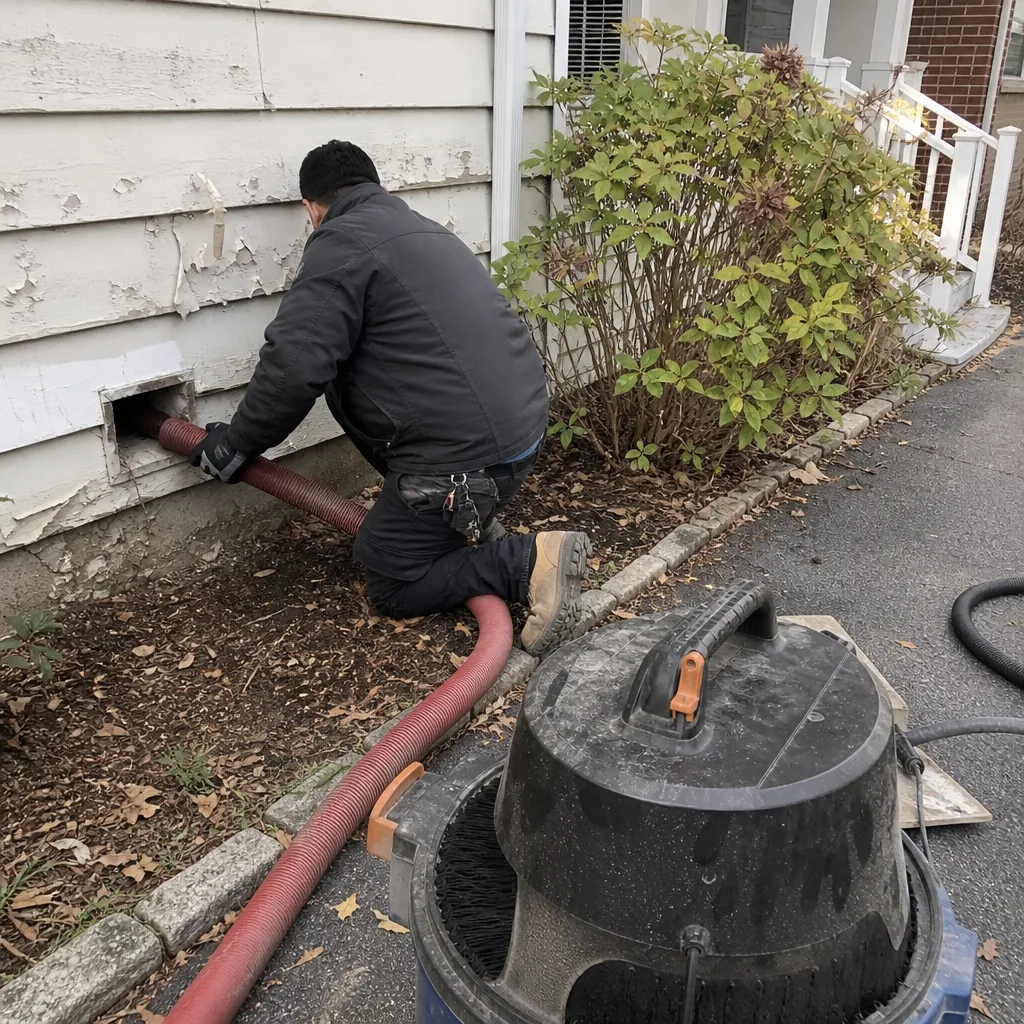 Before
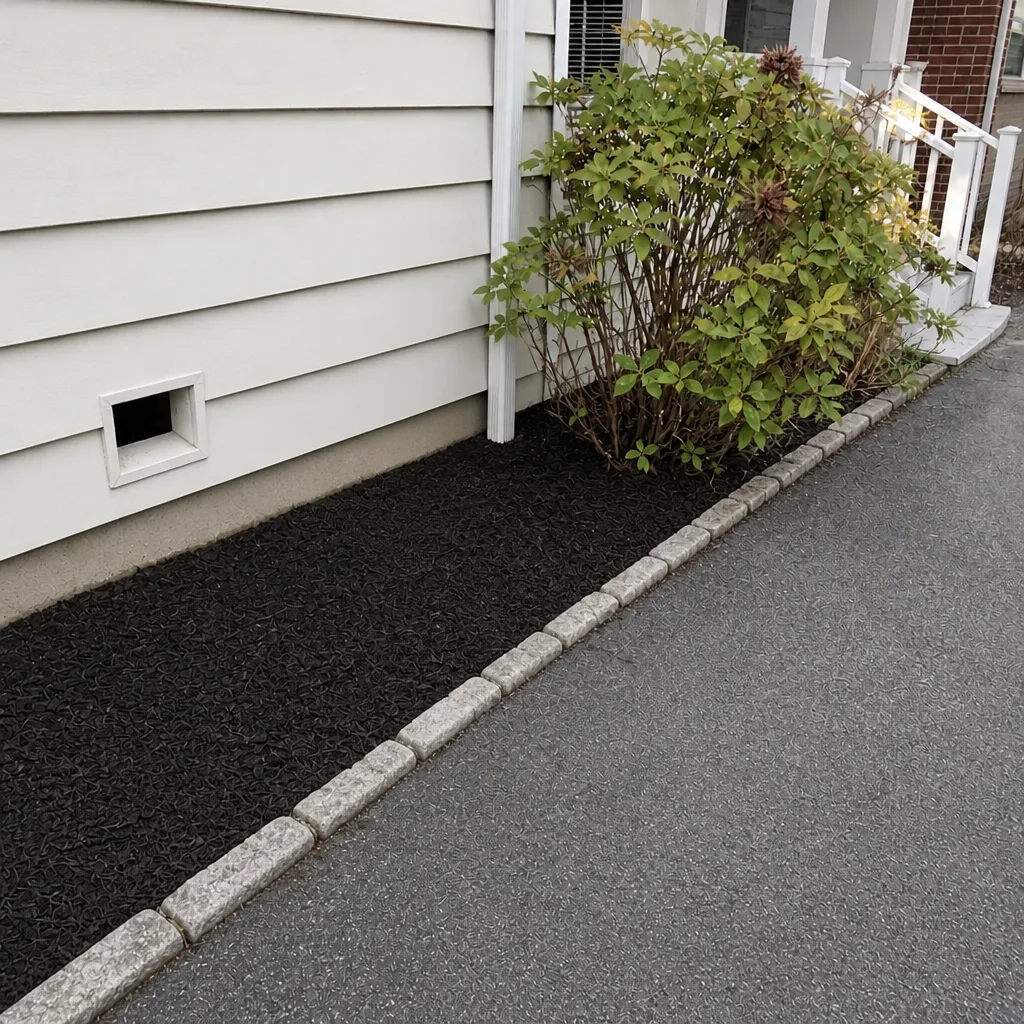 After
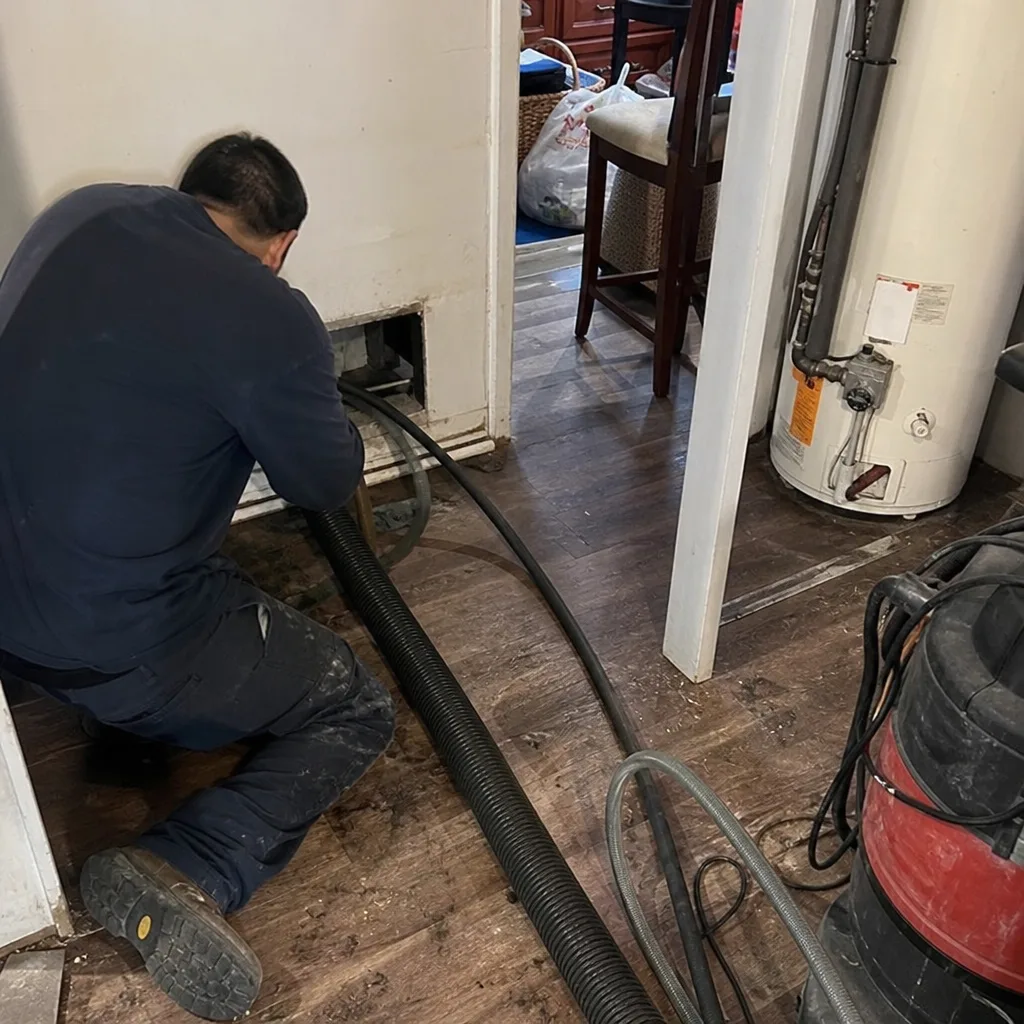 Before
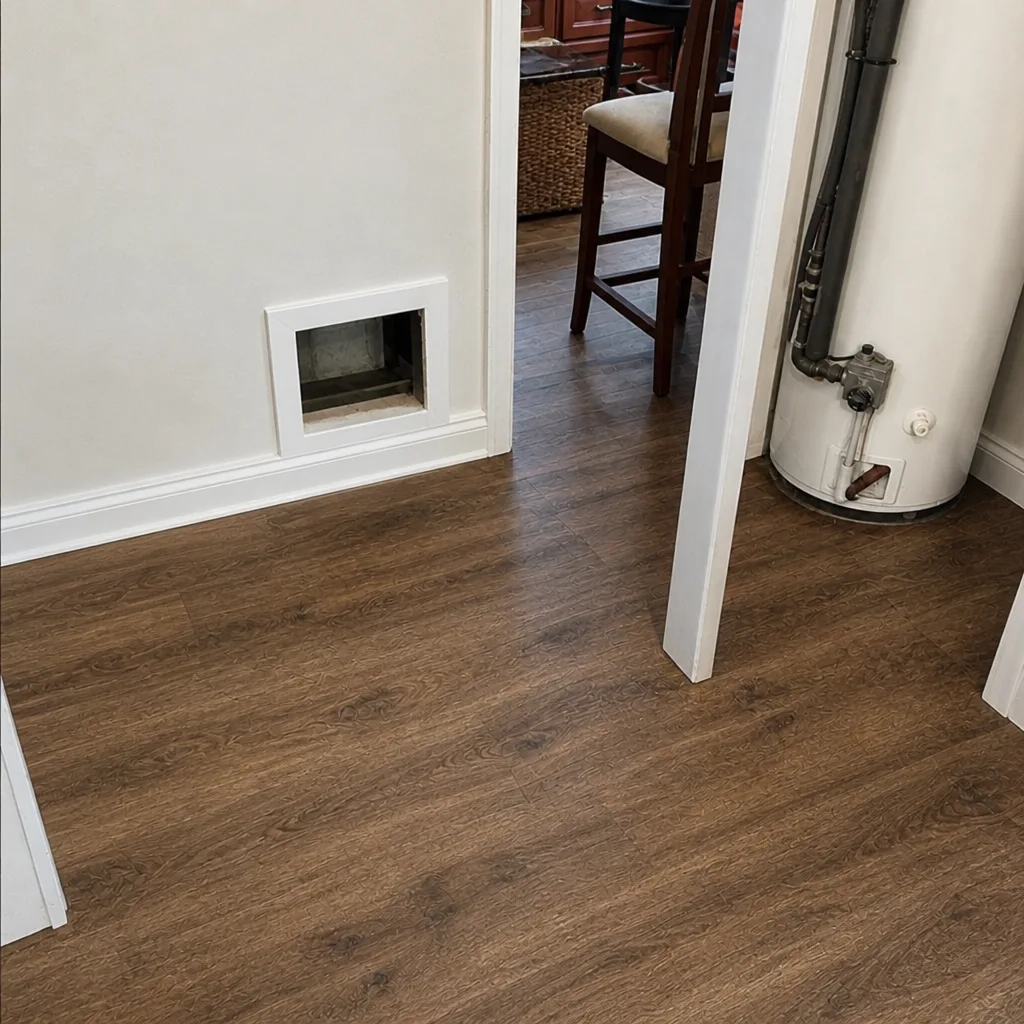 After
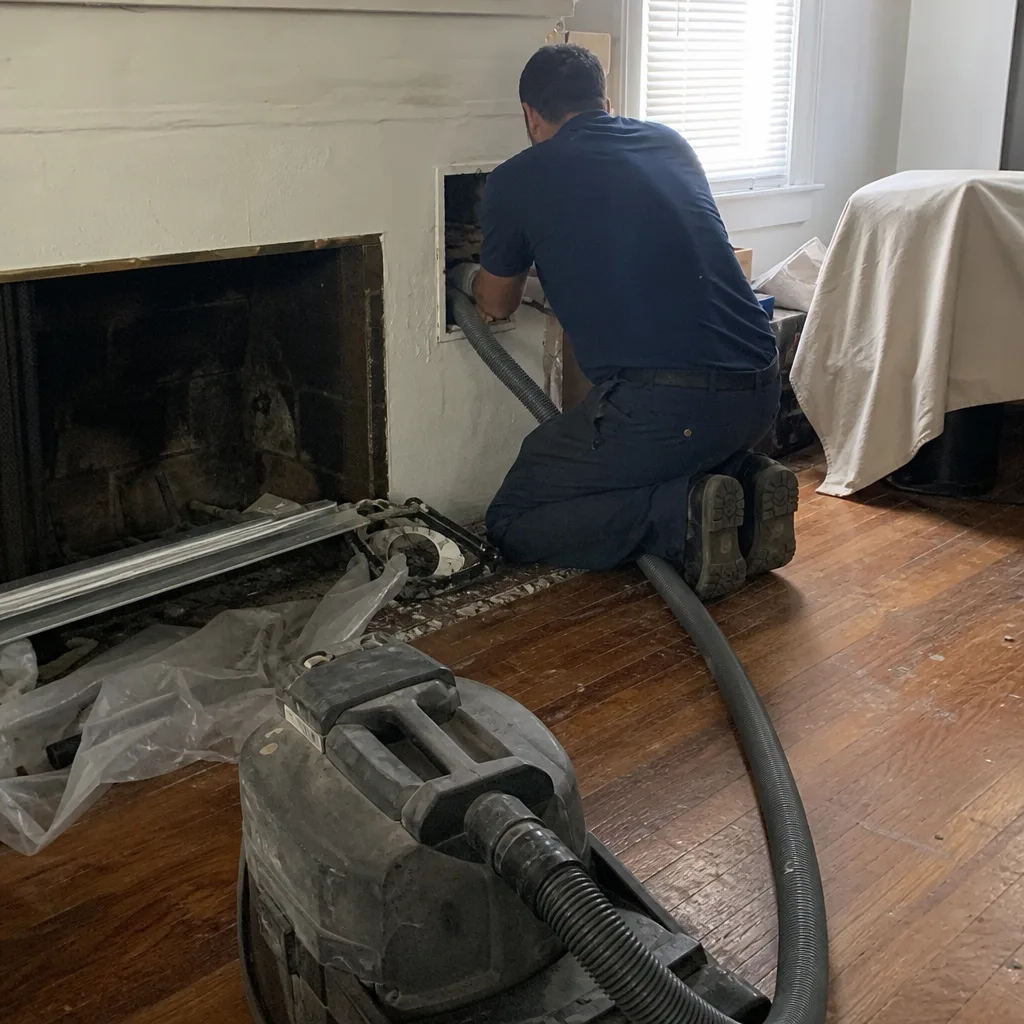 Before
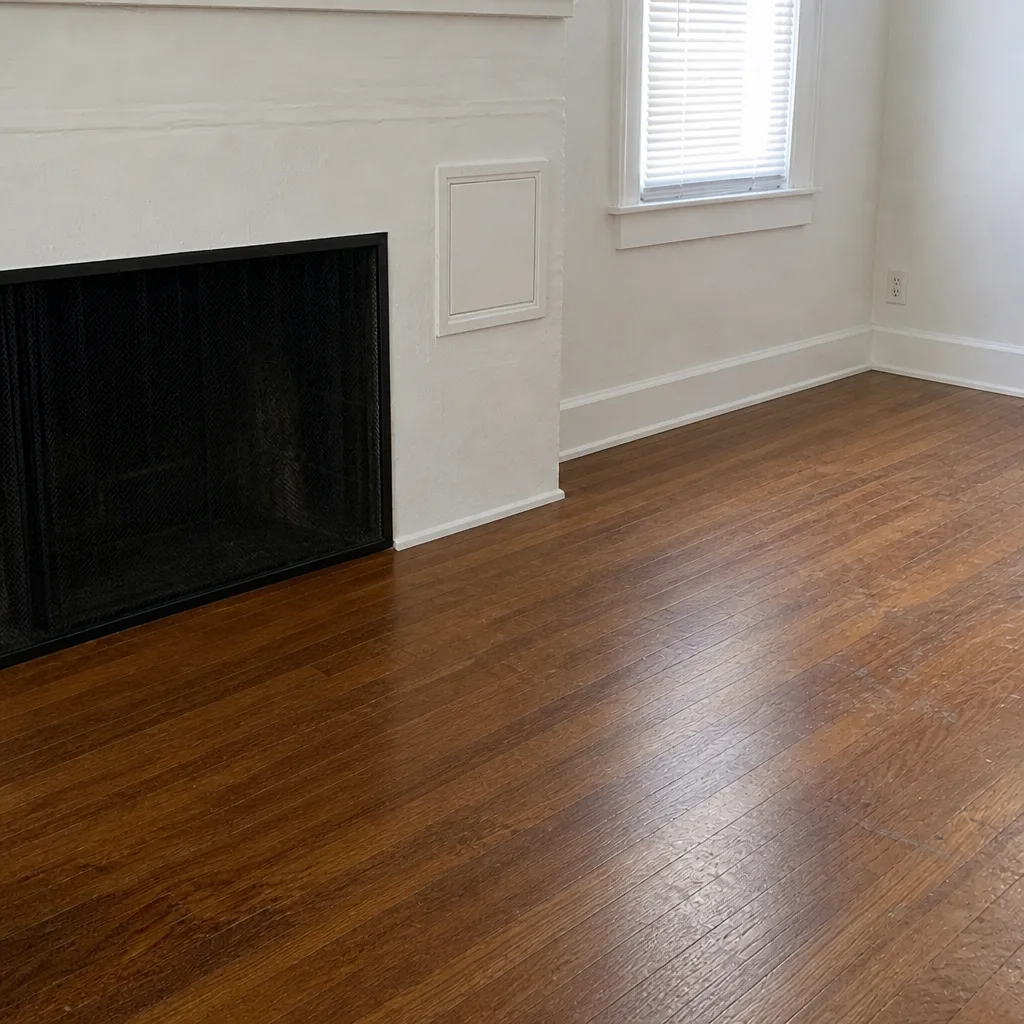 After
When to Call a Professional
Call a professional when the warning signs are persistent, when you’re seeing more than one at once, or when any of them follow a renovation, water event, or pest treatment. Also call if your dryer vent shows any of the fire-hazard signs listed above; that’s not a tomorrow problem. If you can see visible debris through a register, if one room never gets airflow, or if a musty smell turns on with the blower, an inspection will tell you whether you need cleaning, repair, or both. We offer free estimates in Elizabeth – call (833) 946-6248. We answer 24/7. Fast dispatch from 7am to 7pm, Sunday through Friday.
Frequently Asked Questions
Duct cleaning is priced per system, not per vent, and the price is set by a written estimate after inspection. That means you get one flat price for the whole job before any work starts, and no per-vent pricing surprises on-site. Call (833) 946-6248 for an exact quote – estimates are free.
Because the cheap ones aren’t quoting the same job. A low teaser price often covers the visible registers only, uses underpowered consumer-grade equipment, or becomes a far larger invoice once the technician is on-site and finds more. Ask what’s actually included and get the full price in writing before you book. Our estimate covers the whole system, and the written price is the price.
Before-and-after photos of your own ducts. Not stock images, not a generic sample – your ductwork, documented before and after the clean. Ask for that as part of any quote, and don’t book anyone who won’t supply it. We document duct surfaces and the trunk lines specifically, not just the register grilles.
For most Elizabeth homes, every three to five years is a reasonable interval under normal conditions. It shortens considerably after renovation, a water event, or a pest issue, or if you have a heavier dust load from a pet or from nearby construction. The warning signs in this guide are a better trigger than a calendar reminder.
Cleaning removes the debris and contamination that recirculating air distributes, which many people find improves indoor air quality over time. It doesn’t diagnose or treat any medical condition. If your symptoms track with when the system runs, cleaning is worth having done; if you’re dealing with a mechanical duct problem on top, repair matters too.
Cleaning removes contamination from a working system; repair restores a system that’s physically failed – collapsed runs, disconnected sections, torn lining. If your ducts need repair, we don’t stop at the cleaning. We inspect and quote both, so you aren’t calling a second contractor once the problem is found. Call (833) 946-6248 to schedule an inspection.
The Bottom Line
The warning signs are real, and most of them point at the same system rather than the appliances around it. Uneven airflow, musty smells, dust at registers, and post-event contamination all trace back to the ductwork – and the fix depends on whether the system needs cleaning or repair. The best approach is to look at what your registers are showing you, note the timing of any event or season, and get a professional inspection with a written, whole-system estimate. That single step eliminates the guesswork and the bait-and-switch. Call Duct Cleaning Elizabeth at (833) 946-6248 for a free estimate. We answer 24/7. Fast dispatch from 7am to 7pm, Sunday through Friday.
Written by the team at Duct Cleaning Elizabeth.