
Last updated November 15, 2026
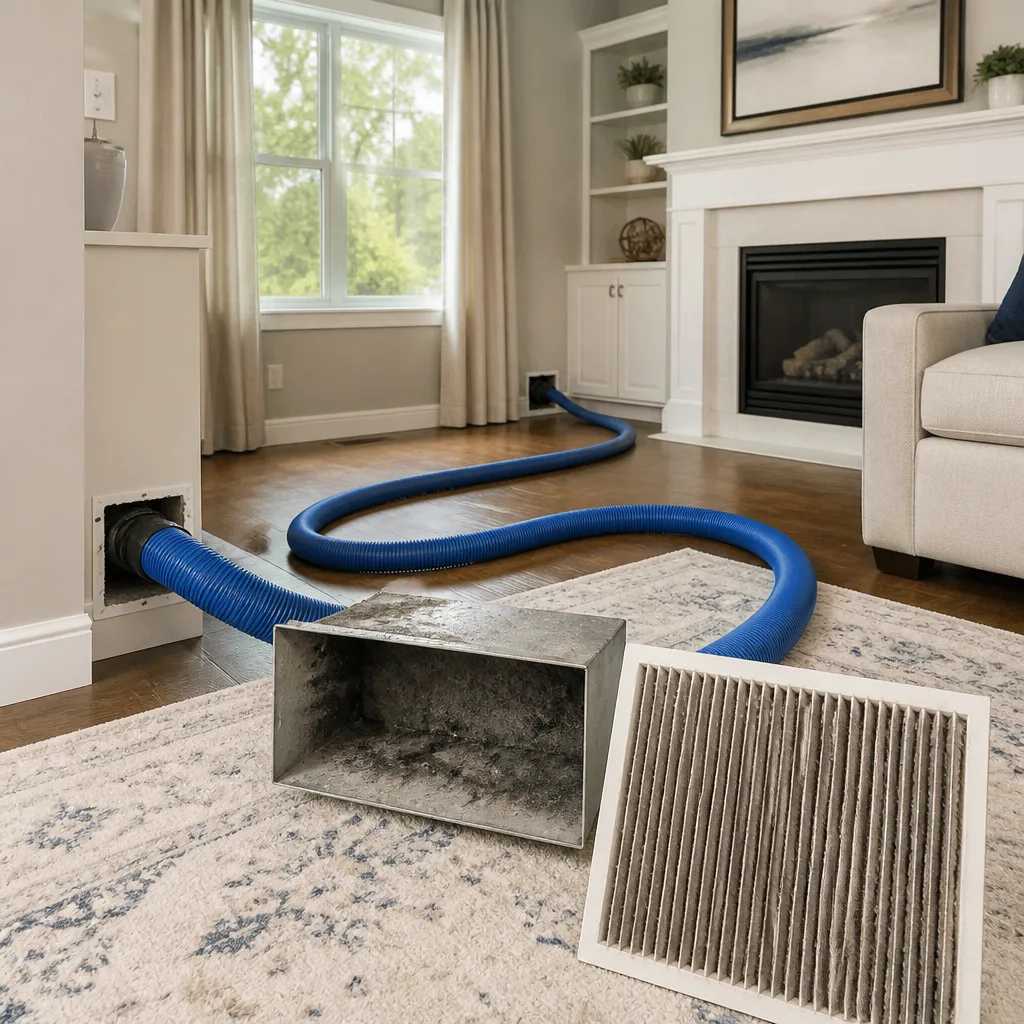 Whole-home duct cleaning
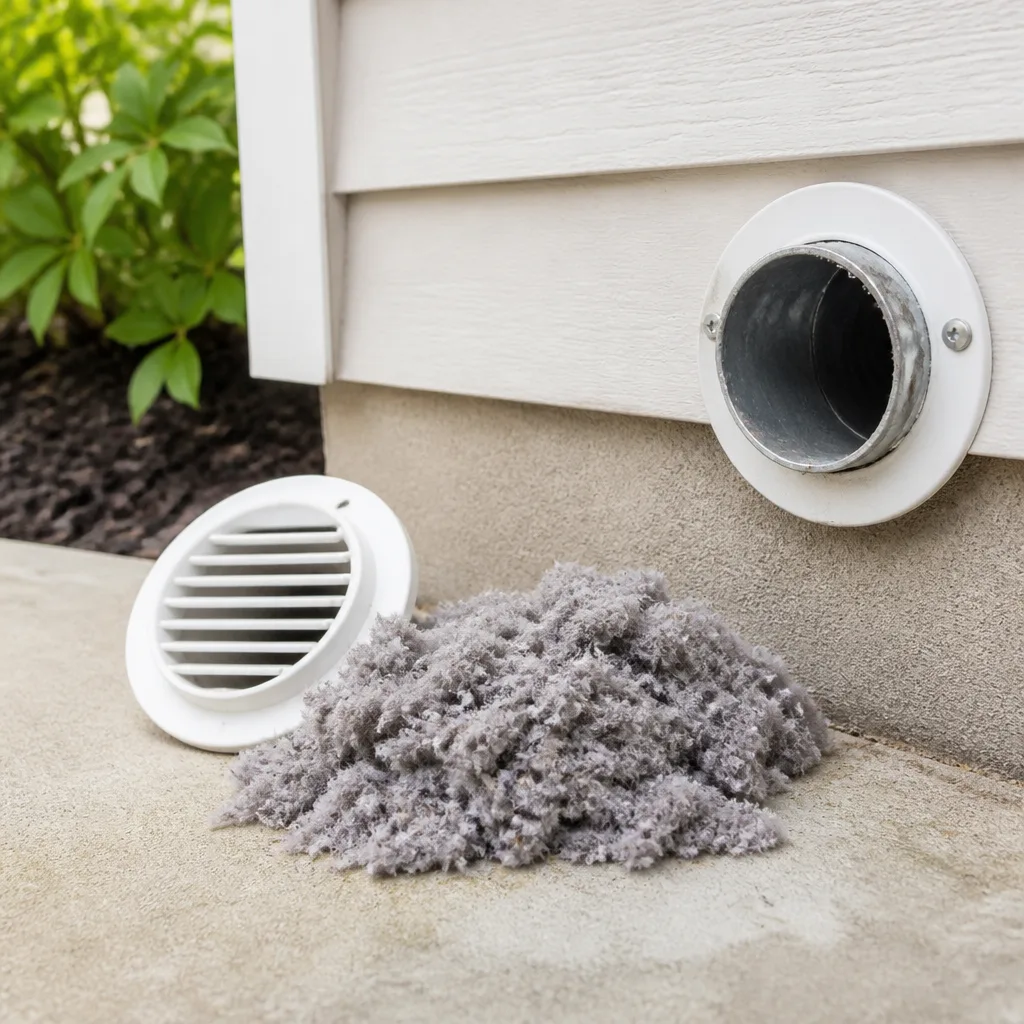 Dryer vent cleaning
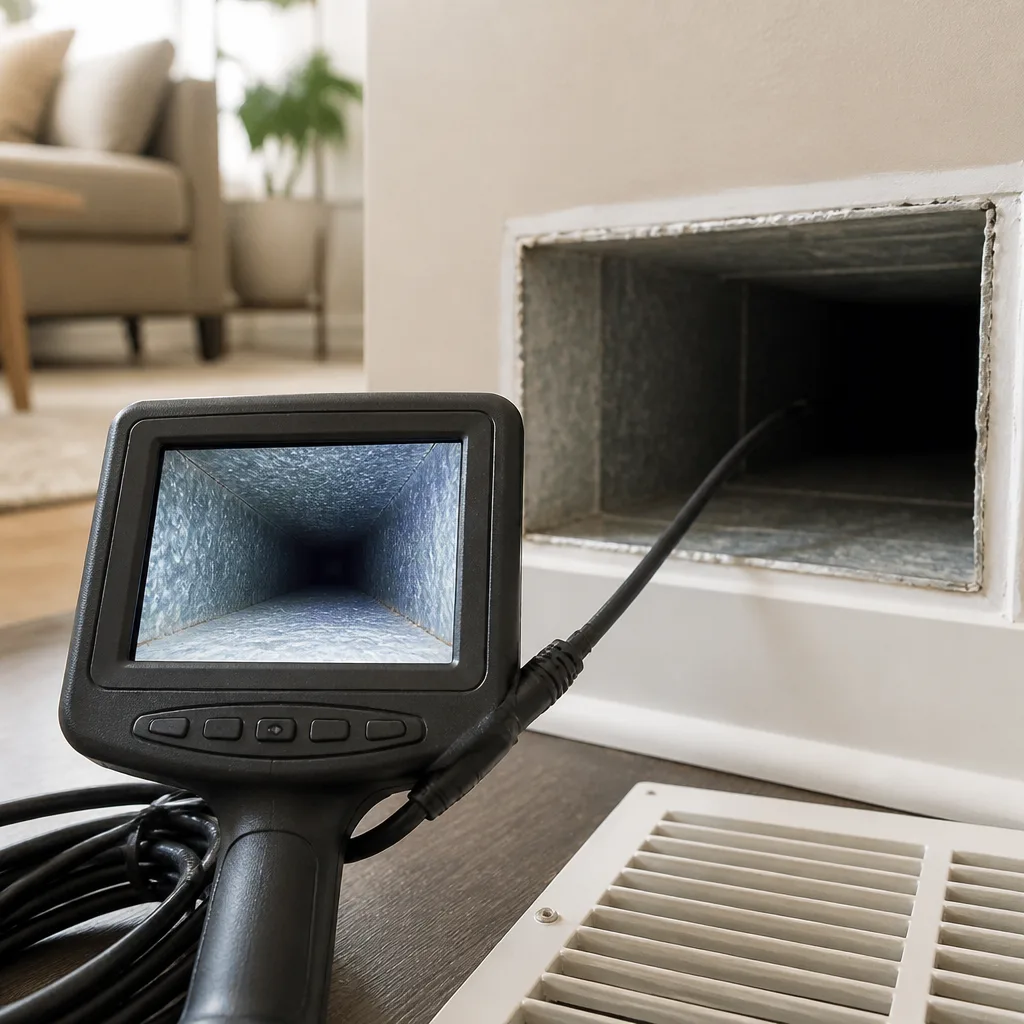 Camera inspection
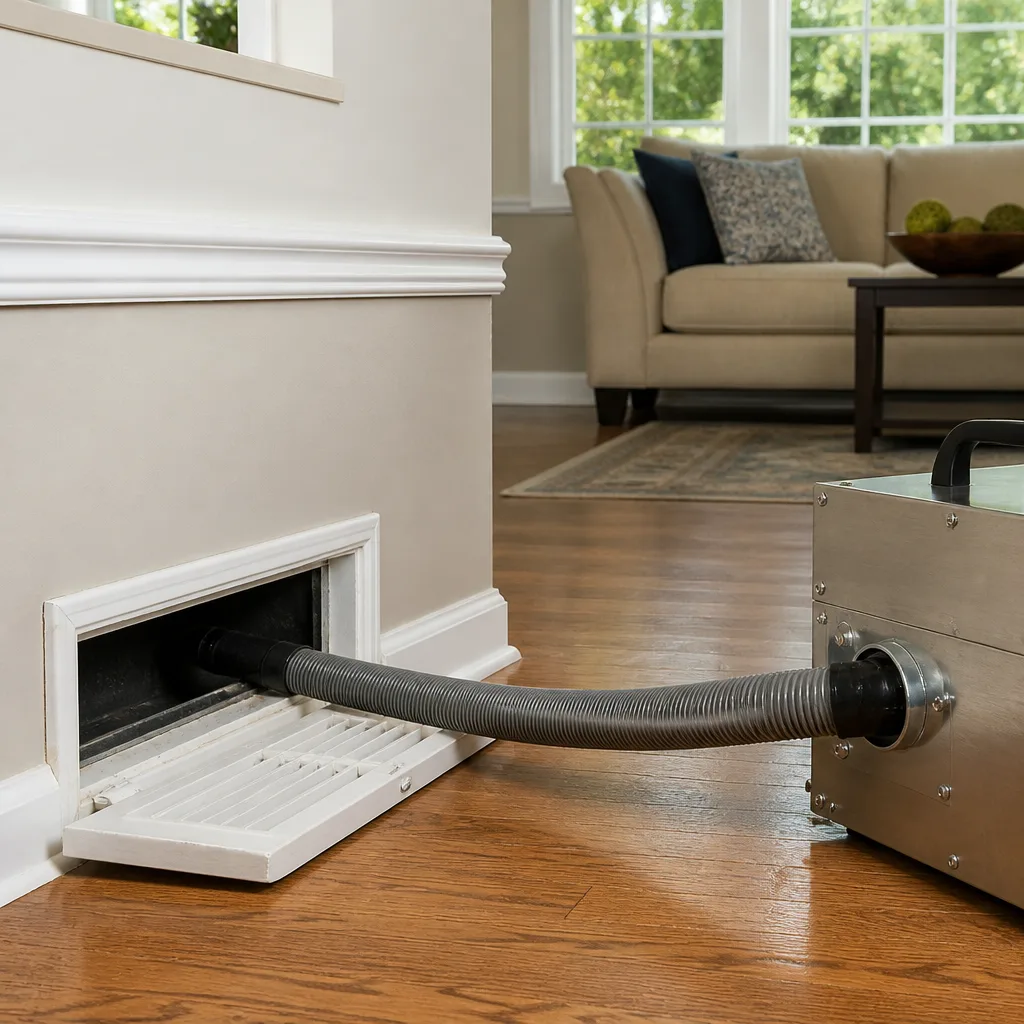 Sanitizing & deodorizing
Whole-system duct and dryer vent check with before-and-after photos - you see exactly what came out of your vents
That "$99 whole-house special" is a bait ad - the real number appears once they are in your hallway, or the "clean" is a shop-vac at the register. We photograph the inside of your ducts before and after instead.
The Complete Guide to Air Duct Cleaning in Elizabeth
A lot of people around Elizabeth assume duct cleaning is about dust. Dust is the least of it. What actually happens inside a home’s duct system over time is an airflow problem: debris collects in the places air slows down, the blower pushes harder to move the same volume, and rooms that once felt comfortable start to feel wrong. Elizabeth has a lot of housing built before 1980, and much of that ductwork was laid out before modern HVAC standards existed. Many of these systems have only ever been vacuumed at the registers, the spots a shop vac can reach. This guide covers what’s actually inside the system, why each section collects different material, and how to tell whether a cleaning job was done properly.
Quick Answer
Air duct cleaning in Elizabeth means cleaning the whole duct network under negative pressure, not just the registers. A proper job agitates debris along the trunk lines and return side with professional-grade rotary equipment and captures it through a HEPA-rated vacuum so it leaves the system instead of settling into your living space. Older Elizabeth homes, especially those near the industrial corridors and the water, usually carry more debris and humidity-related buildup than newer construction, which makes the process and the equipment matter more than the price on the coupon.
Styles & brands we work with
- Whole-home duct cleaning
- Dryer vent cleaning
- Camera inspection
- Sanitizing & deodorizing
Table of Contents
- What’s Actually Inside Your Duct System
- Why Elizabeth Homes Have Specific Duct Challenges
- Surface Cleaning vs. System Cleaning: What’s the Difference?
- What Professional Equipment Actually Does Inside a Duct
- The Full Cleaning Process, Step by Step
- How to Read a Completed Job Report
- Why Dryer Vents Need Separate Attention
- Key Takeaways
What’s Actually Inside Your Duct System
Most homeowners picture ductwork as a simple tube. It’s closer to a tree with several different types of branches, and each section collects different material for different reasons. Understanding the anatomy is the first step toward understanding why a thorough cleaning takes longer than a surface pass.
The supply side
Supply ducts carry conditioned air from the furnace or air handler out to the rooms. They run at positive pressure, which pushes air outward through every joint, seam and imperfectly sealed connection. That outward push keeps some debris from settling in the middle of the run, but it also means anything the blower picks up ends up pressed against the last filter it passes through.
The return side
Return ducts pull air back into the system. Returns usually run at negative pressure relative to the room, so they collect the most debris. This is where pet hair, dust, construction particles and lint tend to accumulate most heavily. In Elizabeth homes with older sheet-metal returns, corrosion spots can catch and hold material that would otherwise pass through.
The trunk line
The trunk is the main artery: the large rectangular or round duct running from the air handler through the center of the house. Branches off the trunk serve individual rooms. Trunk lines accumulate debris in the low points and at corners, and they’re often the section skipped by surface-level cleaning because they’re hard to reach without proper equipment.
The plenum
The plenum is the short, wide section directly above or beside the air handler. It’s the most overlooked part of the system. Debris drawn into the plenum has passed the return filter, and on older Elizabeth installs, the plenum is where you’ll see the most debris film and moisture staining. Cleaning the plenum correctly requires sealing off the air handler so contaminants can’t migrate into the equipment while you work.
Why Elizabeth Homes Have Specific Duct Challenges
Duct systems don’t age in a vacuum. The housing stock, the air, and the general climate all leave marks inside the system. Elizabeth has a set of conditions that make thorough cleaning more useful than in a newer suburb, and it’s worth understanding what those are before you book anything.
- Pre-1980 housing stock. A large share of Elizabeth homes were built when duct systems were laid out with different assumptions about airflow and filtration. Many of these systems have flexible connections and fittings that have loosened over time, giving debris more places to catch.
- Industrial corridors nearby. Elizabeth sits near long-standing industrial and port-adjacent areas. Air moving through neighborhoods carries fine particulate that gets drawn into HVAC returns. That material settles in the return and trunk sections rather than at the registers.
- Humidity from the water. Newark Bay and the Arthur Kill sit right beside the city. Higher baseline humidity in the air means more moisture reaches the return side and plenum, which softens settled debris and helps it cling to duct walls rather than blowing through.
- Renovation cycles. Elizabeth homes change hands and get renovated frequently. Drywall dust, sawdust and construction particles are common residents of ductwork that was never sealed during work. Any home that’s had significant renovation in the last few years is a candidate for professional cleaning.
- Radiator conversions. Many older Elizabeth homes were originally heated with radiators or boilers and had ducted systems added or expanded later. Those add-on runs often have fittings and transitions that collect debris differently than purpose-built systems.
None of these conditions means your ducts are definitely dirty. They mean that when you do schedule cleaning, the job needs to address the whole system, not just the visible registers. If your home was built before 1980, or if you’ve done renovation in the last few years, it’s worth having us come out and inspect before assuming anything about what’s inside. See our air duct cleaning page for what we typically cover in a residential job.
Surface Cleaning vs. System Cleaning: What’s the Difference?
Two cleaners can show up with two very different definitions of “cleaned your ducts.” The gap between them is where most of the frustration in this industry comes from, and it’s worth understanding precisely.
Surface cleaning
Surface cleaning hits the registers, the visible returns, and any ductwork the technician can reach with a handheld vacuum or a brush. It’s usually a 45-minute job. The vacuum is portable, the equipment is lighter, and the technician may not remove the vent covers at all. This kind of cleaning will take dust off the grilles. It won’t reduce what’s sitting in the trunk line or the plenum, and it doesn’t put the system under negative pressure, so loosened debris drifts back into the air and settles again.
System cleaning
System cleaning means putting the whole network under negative pressure from a single source, agitating debris along the entire run, and capturing that debris before it can escape into the house. Registers, branches, trunk and plenum all receive attention. Vents are removed. Equipment is connected to the main trunk, typically through a doorway or a temporary opening, to establish a vacuum that pulls through the entire system rather than one section at a time. When the job is finished, the trunk line and plenum are clean enough to inspect directly, not just the first six inches behind the register.
One thing to ask about up front: whether the quoted price covers one flat price per system or is priced per vent. Per-vent pricing rewards counting rather than cleaning. Flat-rate pricing puts the incentive on getting the system genuinely clean, and it’s the pricing structure we use. Call (833) 946-6248 for an estimate that reflects the real scope of your system.
What Professional Equipment Actually Does Inside a Duct
Equipment is where the line gets drawn in duct cleaning. A shop vac and a brush are not the same tools as a proper duct cleaning system, and the difference isn’t just power. It’s method. Here’s how the main categories of equipment actually behave inside a length of duct.
Portable vacuums and shop vacs
Shop vacs move air through a small hose at relatively low airflow. Inside a 6-inch supply run, the vacuum can only pull debris from right around the nozzle. It can’t establish airflow through the whole duct, so the rest of the run stays untouched. This is fine for a carpet spill. It’s the wrong tool for a trunk line.
Portable duct cleaning units
Purpose-built portable duct cleaners put out real negative pressure and are used with rotary brush or air-whip attachments. These are the standard residential tools and do a thorough job when used correctly. Nikro HEPA-rated units in this class capture fine particulate reliably and keep it contained in the filter rather than exhausting it into the room.
Rotary brush systems
The Rotobrush rotary brush system is a spinning mechanical brush on a flexible shaft that agitates debris loose along the interior surface of the duct. Agitation matters because settled debris clings to the walls. The rotary brush scrubs it free, and the vacuum captures it. Without agitation, a vacuum reaches only what’s loose.
Advanced containment equipment
Abatement Technologies equipment is built for serious air quality work where containment and capture rate matter more than power alone. It’s the kind of gear you see on commercial jobs and on residential jobs where contamination levels are high enough that a standard portable unit is outmatched. When we bring this class of equipment on a residential job, it’s because the inspection said the system called for it.
Our technicians have up to 11 years of experience with these platforms. If your home also has an Aprilaire or Honeywell whole-home air quality system, we can coordinate with and work alongside those systems during the cleaning. Duct cleaning isn’t isolated from the air quality equipment around it, and it helps when the technician knows how those pieces fit together.
The Full Cleaning Process, Step by Step
A proper residential duct cleaning follows a specific sequence. Skipping a step isn’t a shortcut, it’s a hole in the process. Here’s what a full job looks like from arrival to walkthrough.
- Inspection first. Before any equipment comes in, the technician inspects the system to understand layout, identify problem zones and confirm what kind of cleaning is even appropriate. In older Elizabeth homes, this step often turns up damaged or disconnected sections that need to be addressed along with cleaning.
- System survey and setup. Every register and return is located and counted. The air handler is protected so debris doesn’t migrate into it. Negative pressure is established at the main trunk line, often through a temporary access point near the furnace.
- Agitation from register to trunk. Working from the farthest register back to the main trunk, the technician uses rotary brushes and air tools to break debris loose into the negative pressure stream. Each branch and each trunk section gets coverage.
- Plenum and air handler cleaning. The plenum and the immediate air handler interior are cleaned separately because they accumulate the most concentrated buildup and because they’re the highest-risk zones for cross-contamination if not handled correctly.
- Recovery and inspection. Once cleaning is done, the system is inspected again. Freshly cleaned duct interiors should look notably different from before. This is where before-and-after photos are taken so the homeowner has a record.
- Reassembly and test run. Registers are reinstalled, the system is restarted, and airflow is checked. If the inspection found damage that needs repair, this is where the conversation happens. See our Duct Cleaning Elizabeth home page for how we handle the repair side.
One note on older Elizabeth homes. Pre-1980 duct systems sometimes have sections that have come loose from their fittings or seams that have opened over decades. Cleaning will reveal these. It’s helpful to book with a company that can also repair the system rather than leaving you to call a second contractor. We handle air duct repair as part of the same scope.
How to Read a Completed Job Report
If a duct cleaning company can’t hand you a clear record of what was done, you have no way of knowing whether the work was actually performed. A proper completion report is the single best defense against a job that only looks clean from the outside. Here’s what a completed job report should include:
- Before-and-after photos of the duct interiors. Not just the registers. The photos should show the interior of a trunk line and the plenum, where the tricky work happens.
- Number and location of every vent and return serviced. This lets you verify against your own count. If the report lists fewer vents than you have, you know where to ask questions.
- Equipment used. The report should state the equipment platforms used for agitation and negative pressure. If a report says nothing about equipment, there’s nothing to verify.
- Condition notes. Anything the inspection turned up: loose connections, damaged sections, moisture issues, filter condition. These are the actionable findings, and they’re often more valuable than the cleaning itself.
- Photos of any existing damage. If a section needs repair, having documentation of the condition is useful for whatever happens next.
- Technician notes. Not a marketing flyer. A short professional summary of what the technician observed and any recommendations for how often to rebook.
If a company can’t provide this level of documentation, that’s information. It tells you the job is being described rather than recorded. Call (833) 946-6248 and we’ll walk you through exactly what a job report from us looks like before you book.
Why Dryer Vents Need Separate Attention
Duct cleaning and dryer vent cleaning use similar equipment but address two different systems, and the dryer vent matters for a different reason: fire safety. Lint accumulation in a dryer vent is a leading cause of residential fires in the United States, and it happens gradually enough that most homeowners never notice the buildup until it’s a serious problem.
Most dryer vents run through walls or under floors on a long, meandering path to an exterior vent. Along the way, lint sticks to the walls of the duct. Every cycle adds a little more. Over time, the airflow path narrows, the dryer works harder, clothes take longer to dry, and heat builds up. When that heat has nowhere to go and enough lint is present, ignition becomes possible.
Cleaning a dryer vent is a standalone service, and for a lot of homeowners it’s actually more urgent than duct cleaning. Signs that it’s needed include clothes taking noticeably longer to dry, the top of the dryer feeling hot to the touch, a musty smell after a cycle, or visible lint around the exterior vent flap. As part of our dryer vent cleaning service, we run the full length of the vent, not just the first few feet outside the dryer, and we can flag installation issues that make buildup worse.
If your home has both a duct system that hasn’t been cleaned in years and a dryer vent that’s clearly restricted, it’s often worth booking both together. One visit, one trip, both systems addressed. Call (833) 946-6248 to check how that fits into a single appointment.
Key Takeaways
- Duct cleaning is about airflow integrity, not just removing dust. Cleaning the whole system matters more than cleaning the registers.
- Effective cleaning requires negative pressure across the full network, agitation of settled debris, and HEPA-rated capture. Shop vacuums and handheld brushes can’t do this.
- Elizabeth-specific factors – pre-1980 housing stock, industrial corridor proximity, humidity from Newark Bay, frequent renovations – all make thorough cleaning more relevant than in a newer suburb.
- Ask for one flat price per system, not per-vent pricing. Ask about the equipment before you book.
- Ask what the job report will contain before you book, and check whether it includes before-and-after photos of the duct interior.
- Dryer vent cleaning is a separate system with its own safety stakes. Treat it as its own appointment, not as an afterthought.
- Our technicians have up to 11 years of experience with Rotobrush, Nikro, and Abatement Technologies equipment, and we work with Aprilaire and Honeywell whole-home air quality systems.
Common Mistakes to Avoid
- Choosing on coupon price alone. A very low quote usually means surface cleaning at the registers, not system cleaning. Compare the scope of the work described, not just the price.
- Accepting per-vent pricing. Per-vent pricing incentivizes counting vents rather than cleaning them. One flat price per system keeps the job focused on the system itself.
- Skipping the inspection step. In Elizabeth’s older homes, ducts often have hidden damage that cleaning alone won’t fix. No inspection means no way to know if the system needs repair alongside cleaning.
- Assuming duct cleaning covers the dryer vent. These are two separate systems. A duct cleaning appointment does not typically include the dryer vent, and a dryer vent fire hazard is not something to defer.
- Not asking about the equipment. If a technician can’t tell you what platform they’re using for agitation and negative pressure, that’s a red flag. The right equipment matters more than the time spent on site.
- Believing the job happened because it felt thorough. Ask for before-and-after photos of the duct interior and a completion report. If neither exists, no one verified the work.
- Cleaning ducts but ignoring air quality systems. If your home has an Aprilaire or Honeywell whole-home system, it affects how the ductwork performs. Cleaning without accounting for it can leave debris in another part of the system. We’re set up to work alongside these platforms.
See the difference
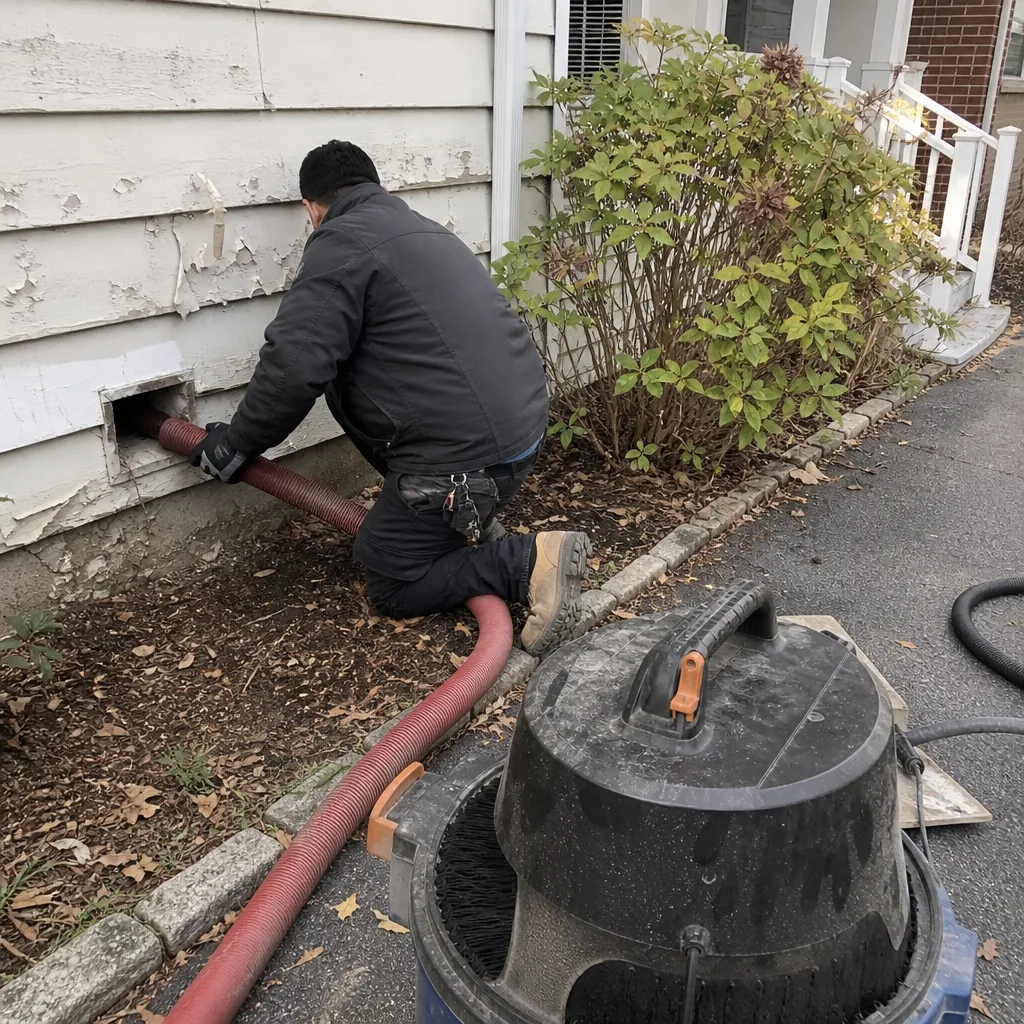 Before
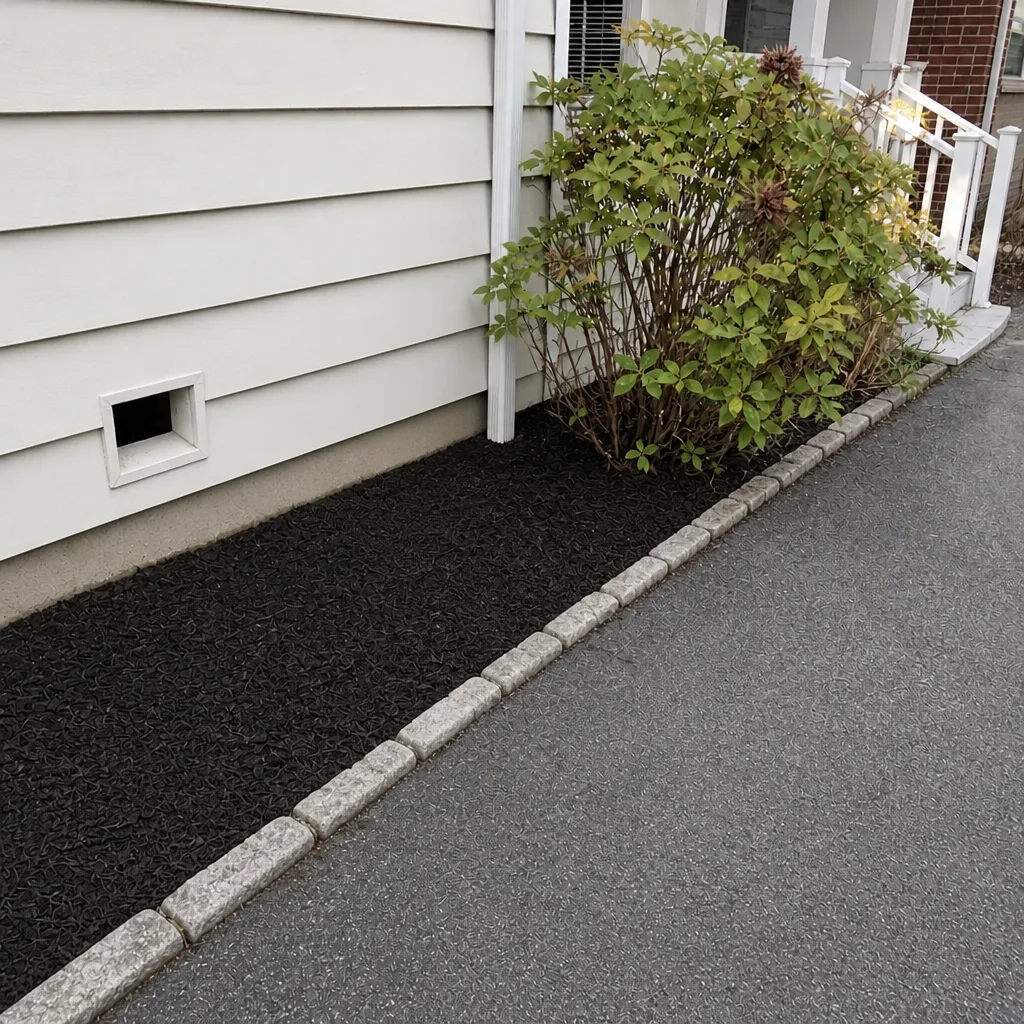 After
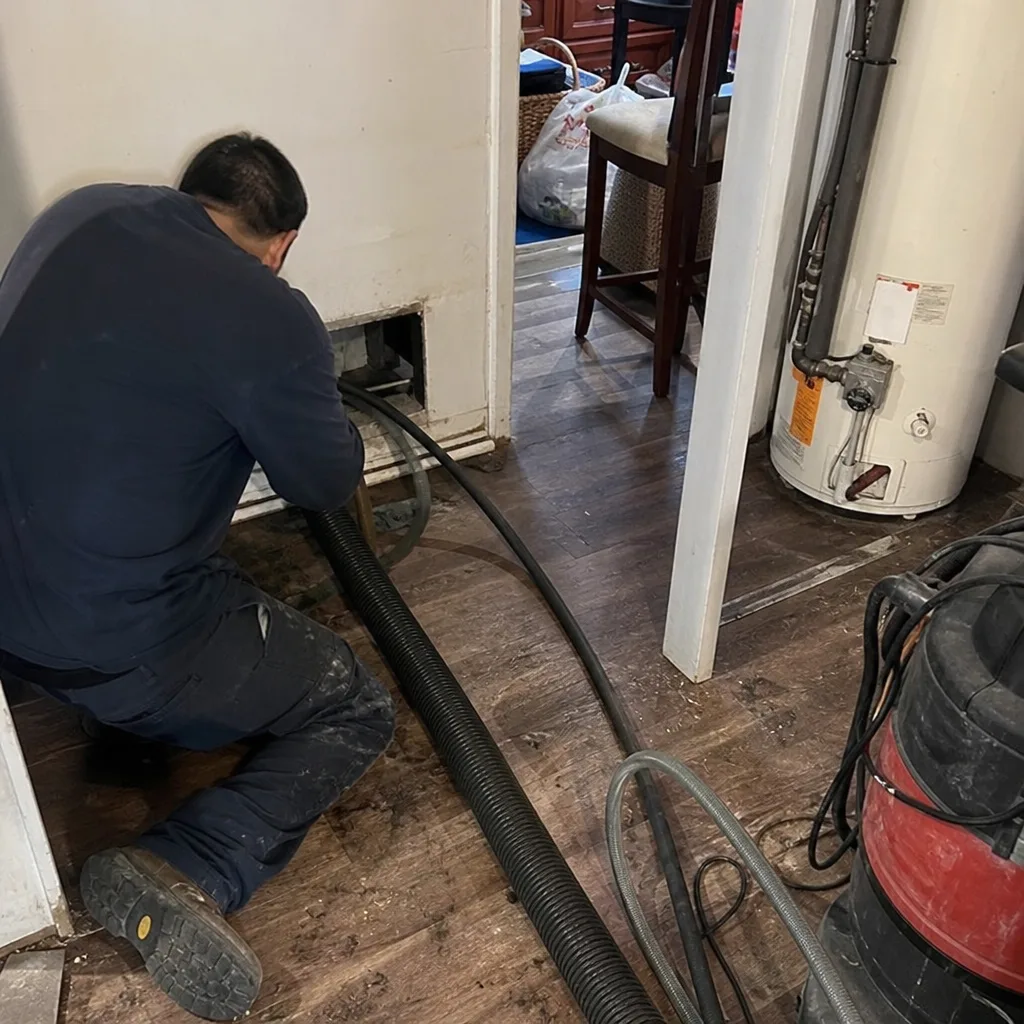 Before
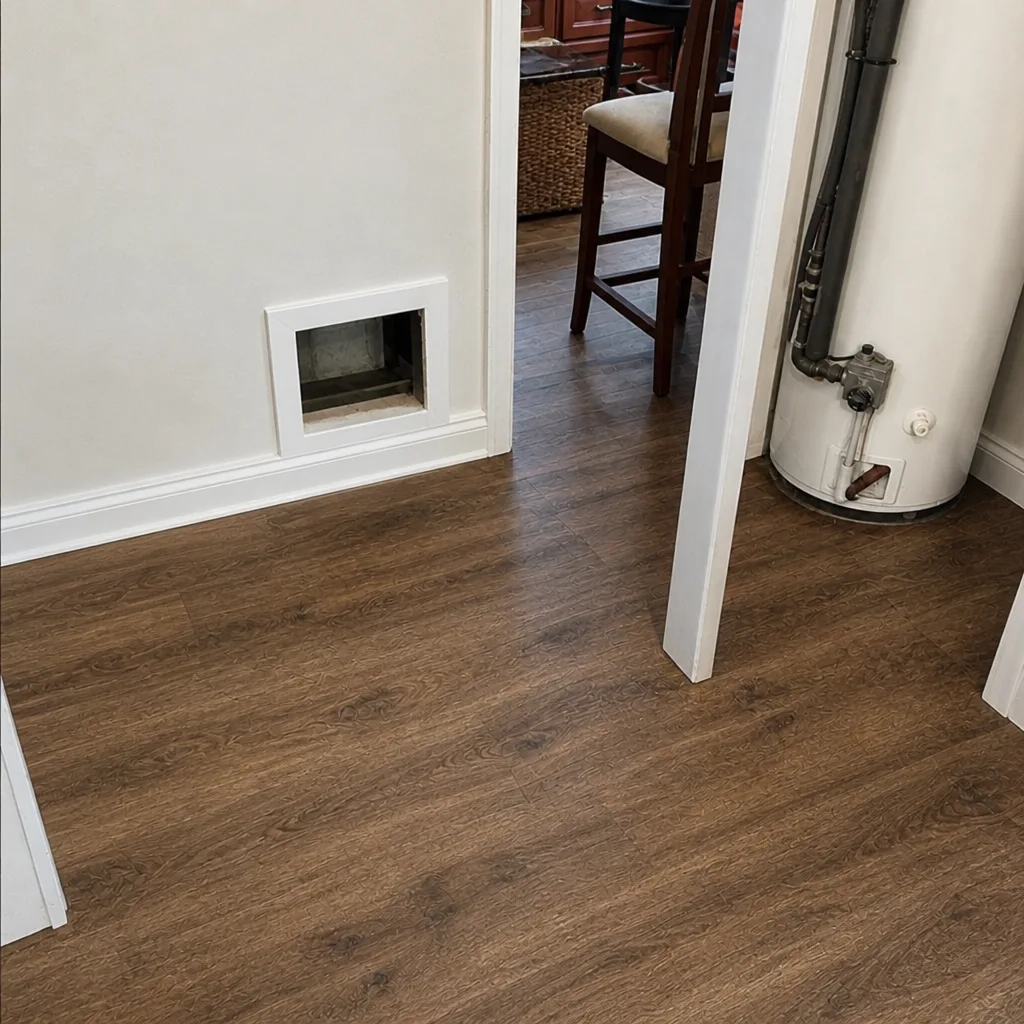 After
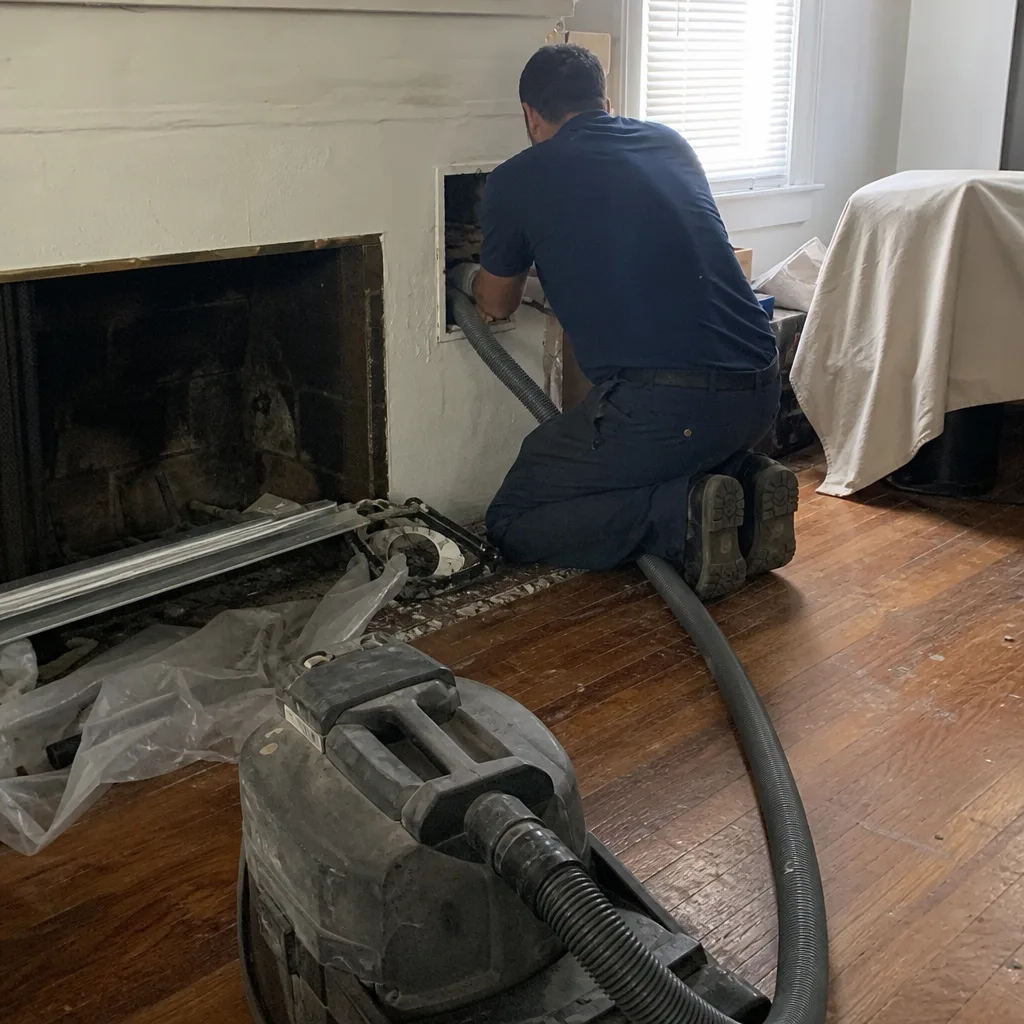 Before
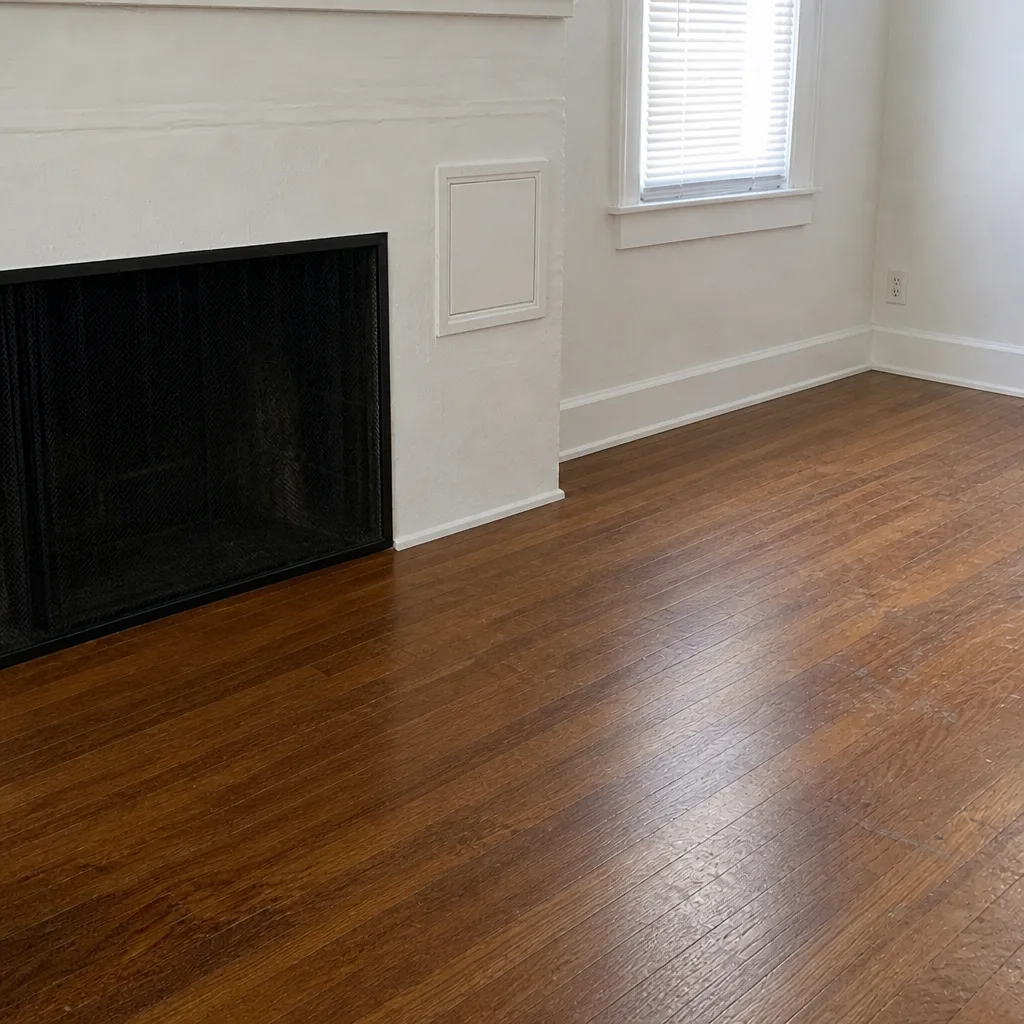 After
When to Call a Professional
Some signs clearly warrant a professional visit. Persistent dust on surfaces right after cleaning, musty odors when the system runs, visibly dark or debris-lined duct interiors (visible through a register with a flashlight), allergy symptoms that flare when the HVAC kicks on, and reduced airflow from registers that used to be stronger. In Elizabeth specifically, homes built before 1980 that have never had documented duct cleaning, and homes that have been renovated in the last few years, are strong candidates. Dryer vents should be inspected if clothes are taking noticeably longer to dry or if the dryer top feels hot during a cycle. Duct Cleaning Elizabeth offers free estimates in Elizabeth – call (833) 946-6248. We answer 24/7, and fast dispatch runs from 7am to 7pm, Sunday through Friday.
Frequently Asked Questions
Duct cleaning in Elizabeth is priced per job, not per vent, and the final price is set by the written estimate after the system is inspected. Whole-system cleaning typically runs higher than a register-only pass because the work is more involved, but the flat-price structure is what keeps the final invoice predictable. Anyone quoting a coupon-style price without seeing the system is describing a different scope of work. Call (833) 946-6248 for an exact quote – estimates are free.
There’s no single correct schedule, but most homes are fine being inspected every few years and cleaned when the inspection shows the need. Homes with pets, recent renovation, allergy-sensitive occupants, or pre-1980 ductwork tend to benefit from more frequent attention. In Elizabeth, the older housing stock and industrial-corridor exposure both push toward more frequent attention than a newer suburban home. Call (833) 946-6248 to ask what an inspection of your system would tell us.
Cheap quotes usually reflect a different scope: surface cleaning at the registers and visible returns, often without negative pressure or proper agitation of the trunk line and plenum. The work is faster, the equipment is lighter, and the results only reach the areas the technician can see. A proper whole-system cleaning takes longer and uses more capable equipment, which is why it costs more up front. Call (833) 946-6248 for a quote that reflects what your system actually needs.
Ask for before-and-after photos of the duct interior and a completion report before you book. If a company can’t commit to providing both, you have no way to verify the work after the fact. Our process includes before-and-after photos so you can see what the inside of your system looks like once we’ve finished. Call (833) 946-6248 and we’ll walk you through what the report includes.
Yes, and Elizabeth homes from that era are a large share of what we see. Pre-1980 systems often need extra care because fittings have loosened and sections may be damaged. Cleaning will reveal these, and we handle air duct repair as a service, so we can fix what we find without you needing a second contractor. Our technicians have up to 11 years of experience on these kinds of systems. Call (833) 946-6248 for a free estimate.
No. The dryer vent is a separate system with its own purpose and its own risks. Lint accumulation in a dryer vent is one of the leading causes of residential fires, so it warrants its own appointment rather than being folded into a duct cleaning. If you’re booking one, it’s worth booking both. Call (833) 946-6248 to set up an appointment that covers what your home needs.
The Bottom Line
Duct cleaning is a systems job, not a surface job. Elizabeth’s housing stock, exposure patterns and humidity make thorough cleaning more relevant here than it is in a lot of places, and that’s worth knowing before you pick up the phone. Expect to see a real inspection, proper equipment (rotary agitation plus HEPA-rated negative pressure), coverage of the trunk line and plenum, and a completion report with before-and-after photos. Expect one flat price per system, agreed before work starts. Anything less is a different job than the one your system needs. If you want a straight answer about your own ducts, our team is ready to take a look.
Get a Free Estimate in Elizabeth
If you’ve read this far and want to know what your own system looks like inside, we’ll come out and inspect it. Duct Cleaning Elizabeth handles air duct cleaning, dryer vent cleaning, and air duct repair throughout Elizabeth, using Rotobrush, Nikro, and Abatement Technologies equipment and working with Aprilaire and Honeywell whole-home air quality systems. Call (833) 946-6248 for a free estimate. We answer 24/7. Fast dispatch from 7am to 7pm, Sunday through Friday. You’ll get a written quote before any work begins, one flat price per system, and before-and-after photos when the job is complete.
Written by the team at Duct Cleaning Elizabeth.